
Last updated November 15, 2026
 Wrought iron
 Wood & steel frame
 Farm & ranch
 Sliding driveway gates
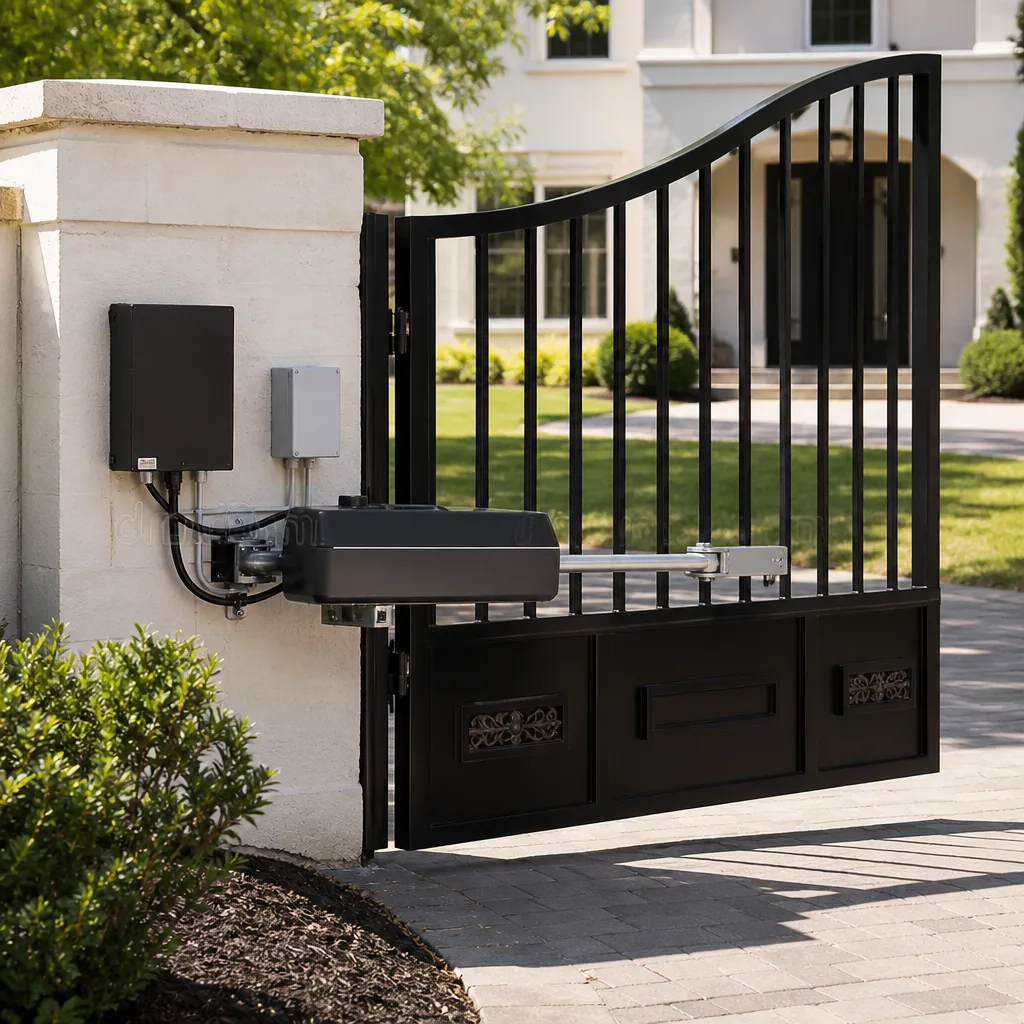 LiftMaster operators
Free on-site gate assessment - hinges, posts, and your LiftMaster or Nice gate operator checked before anything is quoted
The assessment is free and the quote is the invoice.
Get your free estimateGate Repair Warning Signs: A Pasadena Homeowner’s Reference Guide
A gate that hesitates for two seconds before it moves isn’t “warming up.” It’s a motor pulling more current than it should against a mechanical resistance that is getting worse every day you ignore it. Most gate failures we diagnose in Pasadena didn’t start the morning the gate stopped. They started weeks or months earlier, with a symptom the homeowner read as normal and filed away. This guide translates those early signals into plain language and gives each one an urgency level, so you know which signs mean “put it on the calendar” and which mean “stop using the gate and call today.” We’ll cover the mechanical symptoms, the electrical ones, the specific ways Houston-area clay soil affects gate hardware, and the mistakes that turn a small repair into a replacement.
Quick Answer
The most serious gate repair warning signs are a gate that reverses or stops mid-travel, a gate that drifts open or self-closes on its own, visible rust bleeding from welds or hinge plates, and an operator that trips a breaker or throws repeated error codes. Those four point to safety and structural problems and warrant a call today. Slower symptoms – a gate that drags at one point in its arc, a remote that needs to be pressed twice, a hinge that squeaks – usually mean schedule service soon rather than immediately. In short: movement and safety faults are urgent; noise, speed, and convenience faults are not, but none of them fix themselves.
Styles & brands we work with
- Wrought iron
- Wood & steel frame
- Farm & ranch
- Sliding driveway gates
- LiftMaster operators
Table of Contents
- Mechanical Warning Signs: What the Gate’s Movement Is Telling You
- Operator Hesitation: Failing Motor or Mechanical Obstruction?
- Why a Self-Closing or Drifting Gate Is a Safety Event
- What Rust on Fasteners Reveals About Weld Integrity
- Electrical Warning Signs in the Operator and Access Panel
- The Urgency Matrix: Which Signs Escalate Fast
- How Pasadena’s Soil and Climate Affect Gate Hardware
- Common Mistakes to Avoid
Mechanical Warning Signs: What the Gate’s Movement Is Telling You
The gate’s own movement is the most honest diagnostic tool on the property. Before any meter or control board gets involved, watch how the gate travels. A healthy swing or slide gate moves at a consistent speed from the first inch to the last, with no change in pitch, no shudder, and no pause. A gate that speeds up, slows down, or lurches within a single cycle has a mechanical problem somewhere in the linkage, the track, or the hinge points, and it’s loading the operator motor unevenly on every pass.
These are the mechanical symptoms we see most often in Pasadena and what each one usually points to:
- Drag at one point in the arc. Usually a worn hinge bushing or a bent hinge pin. The gate binds at the same angle every time, and the motor pushes through it.
- A slide gate that shudders on the track. Debris in the track, a flattened or worn roller, or a track that has shifted out of level.
- Visible sag at the latch end. The gate has dropped on its hinges or its post has moved. The latch no longer lines up cleanly, and the operator is fighting the misalignment at the close.
- Grinding or metal-on-metal noise. A worn gear in the operator, a chain or arm that has lost lubrication, or hardware that has worked loose. Grinding noise should never be treated as cosmetic.
- A gate that bounces at the stop. The limit settings have drifted or a stop bracket has moved. Every cycle is a small impact on the frame.
Watch a full cycle closely. On a swing gate, stand at the side and watch both hinges as the gate opens. On a slide gate, watch the rollers and the track. Anything irregular at the same point on every pass is mechanical. If the irregularity is random, the cause is more likely electrical, and the section on operator hesitation below covers how to tell the difference.
Operator Hesitation: Failing Motor or Mechanical Obstruction?
A gate that pauses before it starts is the single most misread symptom on the property. Homeowners often describe it as the system “thinking” or “catching up.” It isn’t. The operator is applying current and getting resistance, and the delay is how the motor and control board respond. The question that matters is whether the resistance is inside the motor or in the gate itself, and there’s a two-step test you can do without tools that tells you most of what a technician needs to know.
- Put the operator in manual release and move the gate by hand. Every gate operator has a manual release, whether a key, a lever, or a chain hoist. Disengage the motor and push or pull the gate slowly through its full travel. A healthy gate should move with light, even effort. If it binds, drags, or takes real muscle at any point, the obstruction is mechanical – the problem is the gate hardware, not the operator.
- If it moves freely by hand, re-engage and listen to the operator. A motor that hums, buzzes, clicks loudly, or pauses before turning is drawing current without producing motion. That points to the operator itself – a capacitor, a gear, the motor windings, or a control board issue. On multi-brand systems like LiftMaster or FAAC, the specific fault often shows as a code or a flash pattern on the control board.
That single test splits the diagnosis in half, and it’s why the manual release exists. It’s also why a technician who arrives already familiar with your brand skips the guessing stage. On a LiftMaster or FAAC system, the flash pattern and error behavior are recognizable from experience; on a brand the technician has never touched, the same fault can take far longer to isolate. In Pasadena, where gates are often original to a home that has passed through a few owners, the brand installed is frequently a surprise. We work on the brand that’s already there, whether that’s Linear, BFT, LiftMaster, or something older. electric gate repair is a diagnostic discipline before it’s a repair job, and the manual release test is where it starts.
Why a Self-Closing or Drifting Gate Is a Safety Event
A gate that drifts open on its own, or closes without a command, is not a nuisance setting to live with. It’s a failure of the operator’s ability to hold the gate in position, and it creates two distinct risks: unauthorized access when the gate drifts open, and a crushing hazard when a heavy gate panel moves without an obstruction check. Both are the kind of problem that should be fixed before the gate is used again, and in most cases the safest short-term move is to leave the gate in manual release and secured until a technician sees it.
The causes vary with the hardware and the ground it’s set in. In the Houston area’s expansive clay soils, three patterns show up again and again on drift and self-close complaints:
- Post movement from soil expansion and contraction. The clay swells when wet and shrinks when dry, and over seasons it can shift a hinge post or a slide gate track out of plumb. A swing gate hung on a post that has tilted a fraction of an inch will drift because the gate is no longer balanced on its hinges.
- Operator limit drift after seasonal settling. The open and close limits are set relative to the gate’s physical position. When the gate hardware shifts, the limits no longer match, and the operator can travel slightly past the stop or fail to hold the gate shut.
- Failing obstruction sensors or a damaged safety edge. The control board relies on the safety edges and loop detectors to know when the path is clear. A sensor that has gone intermittent can cause the gate to reverse or stop short, which reads as erratic self-closing.
On commercial and HOA properties around Pasadena, drift is often the first sign that access control logic or the loop detectors are failing, and that’s a call worth making the same day. On a residential gate, it’s still a safety fault. A gate is the heaviest moving object most homes own, and a panel that moves when it shouldn’t can injure a person or damage a vehicle just as easily as a gate that won’t move at all.
What Rust on Fasteners Reveals About Weld Integrity
Rust on the surface of a painted gate is usually cosmetic. Rust creeping out from under a weld, a hinge plate, or the head of a bolt is a different story. The visual logic is simple: rust needs moisture and bare steel, and if corrosion is bleeding out from a joint, it’s growing from inside a place you can’t see. On steel gates, that means the weld bead or the fastener itself is the source, and the steel behind it is losing section thickness while the paint still looks intact from a few feet away.
What to look for, in order of concern:
- Rust streaks running down from under weld beads. This is the highest-priority pattern. A weld that’s rusting from inside is a structural failure waiting to happen, because the weld is holding the gate together.
- Rust blooming around bolt heads and hinge pins. The fastener is corroding, which means it can loosen and back out. Loose hinges are the beginning of sag and misalignment.
- Rust rings at the base of posts where they meet concrete. This is often where moisture pools, and the post section closest to the ground carries the heaviest load. A post that’s thinning at the base is a post that needs inspecting.
- Paint bubbling or lifting with no impact damage. The steel under the paint is corroding and pushing the coating off.
Pasadena’s humidity and heavy summer rain accelerate all of this, and a steel gate with no regular inspection gives corrosion plenty of time to work. A quick walk around the gate with a flashlight, checking the welds, the hinge plates, and the base of every post, is a worthwhile habit a few times a year. If you find rust streaks coming from a structural weld, don’t wait for the gate to fail. That’s a same-day call.
Electrical Warning Signs in the Operator and Access Panel
Electrical faults in a gate system rarely announce themselves as electrical. They masquerade as mechanical problems, as “the remote is acting up,” or as intermittent failures that seem to fix themselves. The pattern that matters is whether the symptom is consistent or intermittent. A consistent failure points to a component that has failed. An intermittent failure that comes and goes with weather, time of day, or time of month usually points to a wiring issue – a loose connection, moisture in a junction box, or a corroded terminal.
The electrical warning signs to watch for:
- Error codes or flash patterns on the control board. Every major operator – LiftMaster, FAAC, BFT, Linear – uses a diagnostic blink code or a display to report faults. Write down the exact pattern or code before calling. It saves diagnostic time and often points directly to the failed subsystem.
- A flickering or slow keypad. The access keypad should respond immediately and consistently. Flickering backlighting, keys that need a hard press, or a keypad that works some days and not others usually indicates a power or wiring problem upstream, not a bad keypad.
- A breaker that trips when the gate runs, or a fuse that blows repeatedly. This is a strong sign of a motor drawing excess current or a short in the wiring. Do not keep resetting the breaker and running the gate.
- A gate that works from the remote but not the keypad, or the keypad but not the loop. When one input path fails and another works, the operator is fine and the fault is in the failed input’s wiring or sensor.
- A gate that fails only after rain. Moisture has entered an enclosure, a junction, or a splice, and the fault appears when that connection gets wet. These are the hardest intermittent faults to chase and the most important to fix, because they tend to fail when the gate is least convenient to have stuck.
If you see scorch marks, smell burning, or see exposed wiring at the operator, stop using the gate and call. Electrical work on a gate operator is not a homeowner-level job, and the control panel carries enough current to injure someone. Pasadena Gate Service diagnoses these faults as a core competency, including the loop detector and access-system failures that generalists tend to hand back to the customer. Loop detector failures in particular are often blamed on the operator when the actual problem is a failed loop or a bad splice in the driveway. That’s a job for a gate repair specialist who knows the difference.
The Urgency Matrix: Which Signs Escalate Fast
Not every warning sign deserves the same response. Some are effectively noise, some need scheduling within a week or two, and some mean the gate shouldn’t be used until it’s been seen. Here’s how the signs in this guide categorize, along with a rough sense of how fast each one tends to worsen. This is the fastest way to decide what to do about a symptom you’ve noticed.
- Call today – stop using the gate if the risk is real: Gate reverses or stops mid-travel; gate drifts open or self-closes; safety edge or obstruction sensor not responding; breaker trips or fuse blows during operation; scorch marks, burning smell, or exposed wiring at the operator; rust streaks from structural welds; visible post movement at the base.
- Schedule within the week: Operator pauses before starting; grinding or metal-on-metal noise; gate drags at one point in its travel; visible sag at the latch end; slide gate shudders on the track; keypad fails intermittently; gate fails only after rain.
- Schedule when convenient – but don’t skip it: Remote needs two presses; hinge squeaks; gate runs slower than it used to; surface rust with no structural welds showing; a gate that bounces at the stop.
Two patterns sit outside the matrix by design. First, a symptom you’ve noticed escalating in the last month – a gate that paused a little is now pausing a lot – is more urgent than its category suggests, because a component that’s degrading is the one that fails next. Second, any commercial or HOA gate carries higher stakes. A stuck gate on a shared driveway blocks every resident, and a drift fault on an access-controlled property is a security issue, not an inconvenience. Property managers in Pasadena should treat the “schedule within the week” list as today’s list.
How Pasadena’s Soil and Climate Affect Gate Hardware
The weather and soil in and around Pasadena put specific stresses on gate hardware that the same gate wouldn’t see elsewhere. The Houston-area clay soils expand when wet and shrink when dry, and that seasonal movement works on posts, footings, and slide gate track every year. A gate that was perfectly aligned at installation can drift out of alignment over a few wet-and-dry cycles, and that misalignment shows up as drag, sag, drift, or a latch that won’t catch cleanly.
The climate compounds it. Summer humidity and regular heavy rain keep steel hardware damp, which drives the corrosion discussed above. Ground moisture also softens soil around posts, and a post that’s already started to shift moves faster during a wet stretch. On a slide gate, the track is even more sensitive to ground movement than a swing gate’s hinges, because the entire track has to stay level for the gate to run smoothly. A track that’s out of level forces the rollers to climb one edge of the track, and the operator pays for it in every cycle.
For homeowners across Pasadena, this means a few habits pay off. Watch the gate’s travel after a heavy rainy stretch – that’s when alignment issues are most likely to appear. Check the posts and track after any season of wet-then-dry weather. Keep hinges and the track clear of debris and lightly lubricated. And keep an eye on the hardware after any landscaping work near the gate, because a shifted sprinkler head or a new concrete pour can affect the gate’s footing and alignment. When a symptom persists past one weather cycle, it’s not the weather. It’s the hardware. If that hardware is on a Pasadena property, our team works from neighborhoods across Pasadena and we’re happy to take a look. Our technicians have up to 15 years of experience diagnosing exactly these ground-and-hardware problems.
Common Mistakes to Avoid
- Resetting the breaker and running the gate again. A breaker that trips under load is telling you the operator is drawing excess current. Running it again risks damaging the motor and control board, and it doesn’t address the cause.
- Greasing a grinding noise away. Lubrication quiets hinges but it doesn’t fix a worn gear or a stretched chain. If noise persists after lubrication, the problem is inside the operator, and continuing to run it wears the gear further.
- Adjusting limits to fix a drift or misalignment. If a gate has drifted because its post moved, raising or lowering the limit setting makes the symptom less visible and the misalignment worse. Fix the physical alignment first, then reset limits.
- Replacing the remote or keypad when the fault is wiring. A keypad that fails intermittently is rarely a bad keypad. Replacing it without checking the power and wiring upstream just swaps one component for another and leaves the actual fault in place.
- Ignoring rust on structural welds and painting over it. Paint over rust doesn’t stop corrosion. If rust is bleeding from a weld, the steel is thinning behind the paint, and hiding it only delays the repair.
- Using the gate in manual release permanently instead of repairing it. A gate left disengaged and propped open is no longer doing its job. It’s an access problem and a liability problem at the same time.
- Calling a brand the gate isn’t. Homeowners often misidentify the operator brand because the branding is faded or the remote is a different brand than the operator. It’s worth being specific when you call, because a technician familiar with the actual system diagnoses it faster. If you’re not sure, tell us what’s on the operator and what’s on the remote, and we’ll sort it out.
When to Call a Professional
Call a professional when the symptom is a safety or movement fault: a gate that reverses, drifts, stops mid-travel, or trips a breaker. Also call when a fault involves the electrical side of the operator – error codes, intermittent failures, a keypad that won’t respond consistently, or any sign of scorched wiring. Those are not safe to troubleshoot by replacement guessing, and the control panel carries enough current to injure someone. Call when structural rust is involved, and call when a post or track has visibly moved. If the symptom is mechanical noise or speed, schedule the repair before it becomes a safety fault; operators that run against resistance fail faster, and the repair is smaller before the motor is involved. Pasadena Gate Service offers free estimates in Pasadena – call (855) 772-8171. We answer 24/7. Fast dispatch from 7am to 7pm, Sunday through Friday.
See the difference
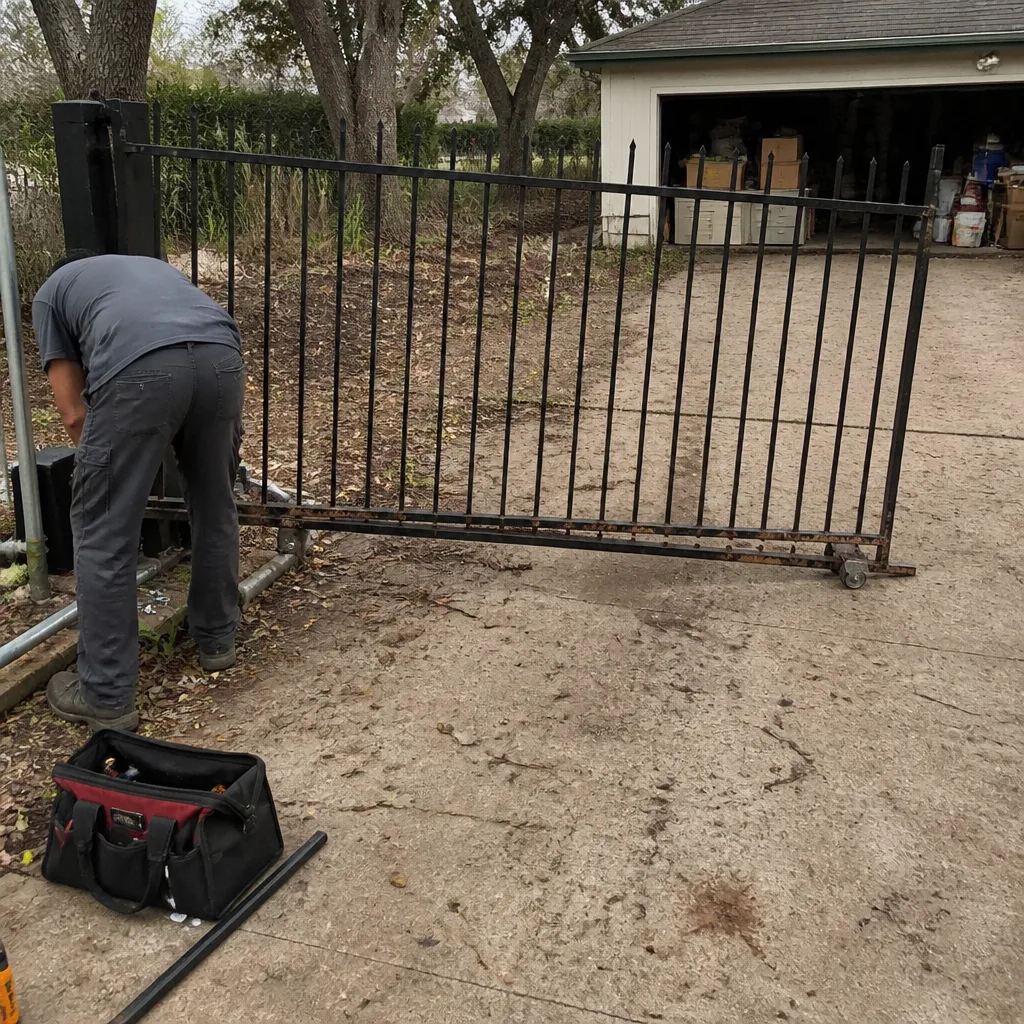 Before
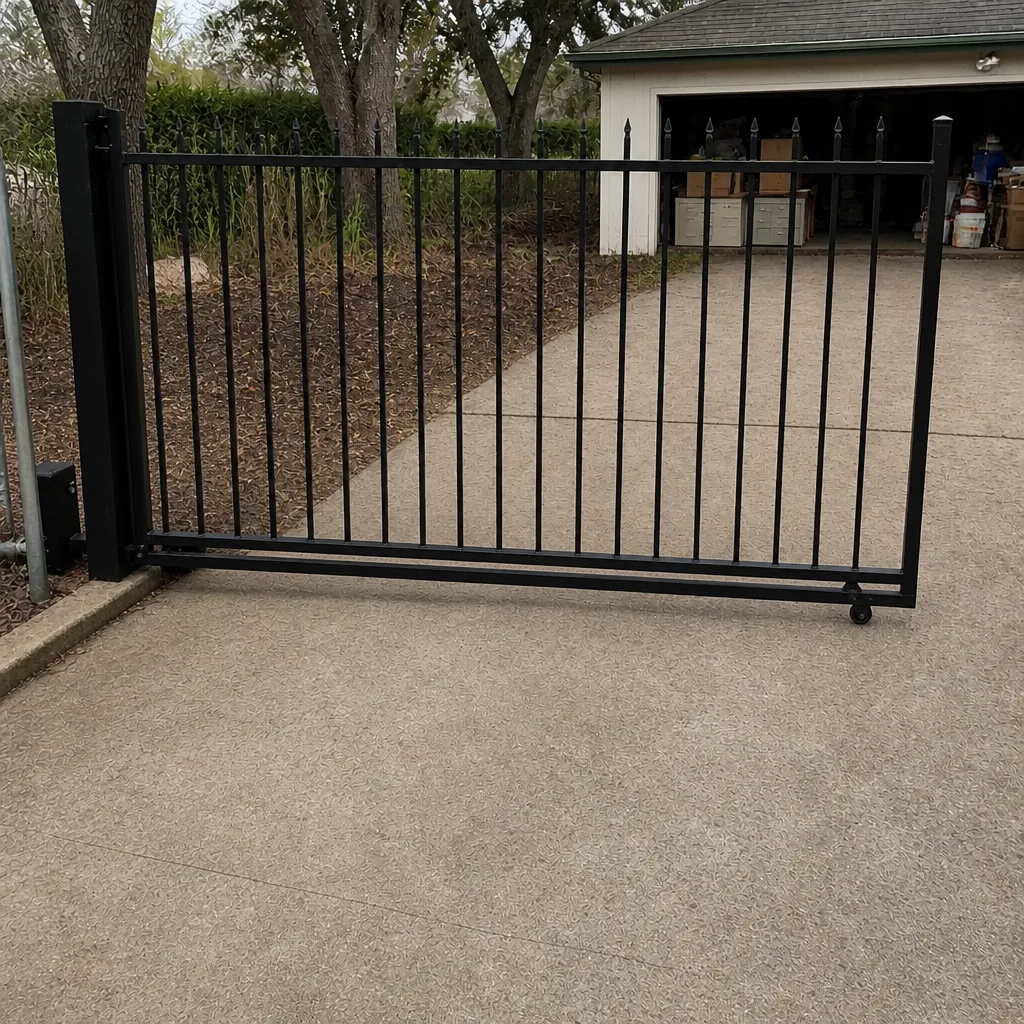 After
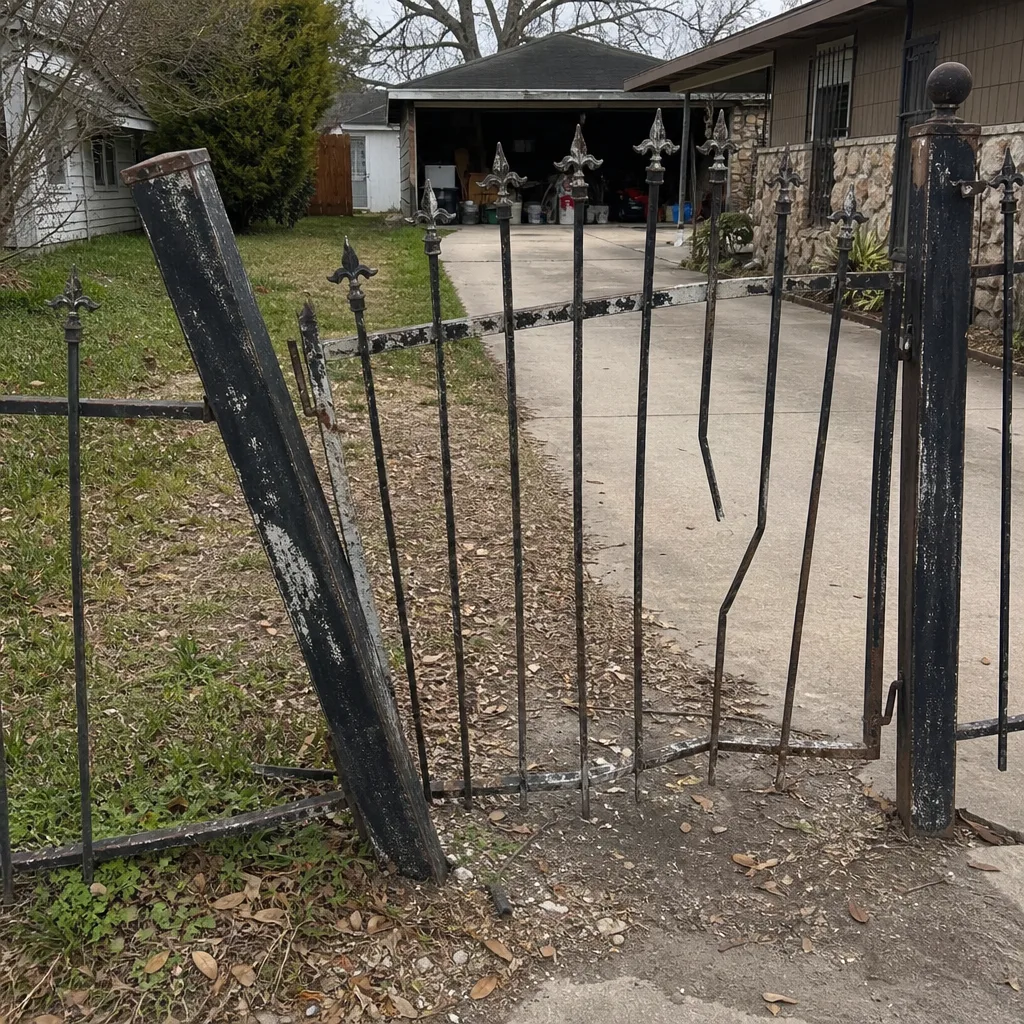 Before
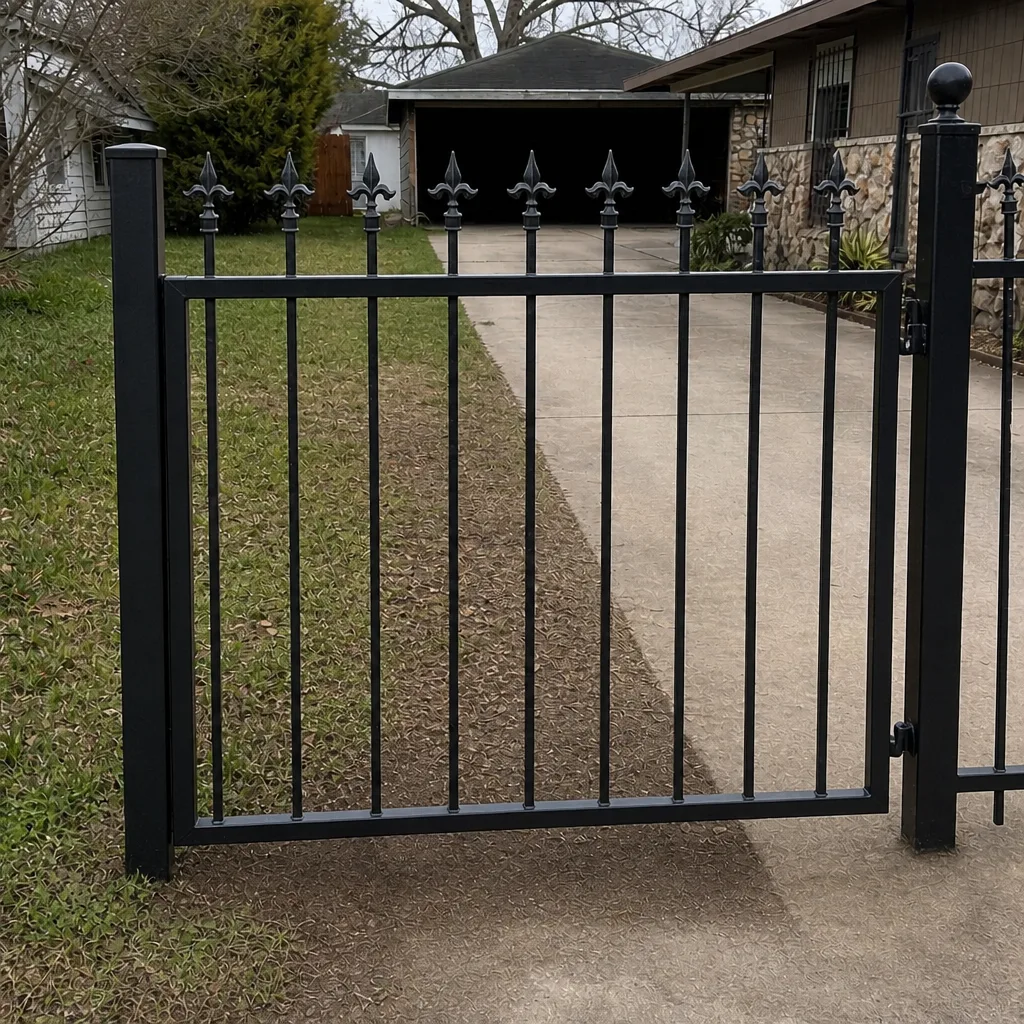 After
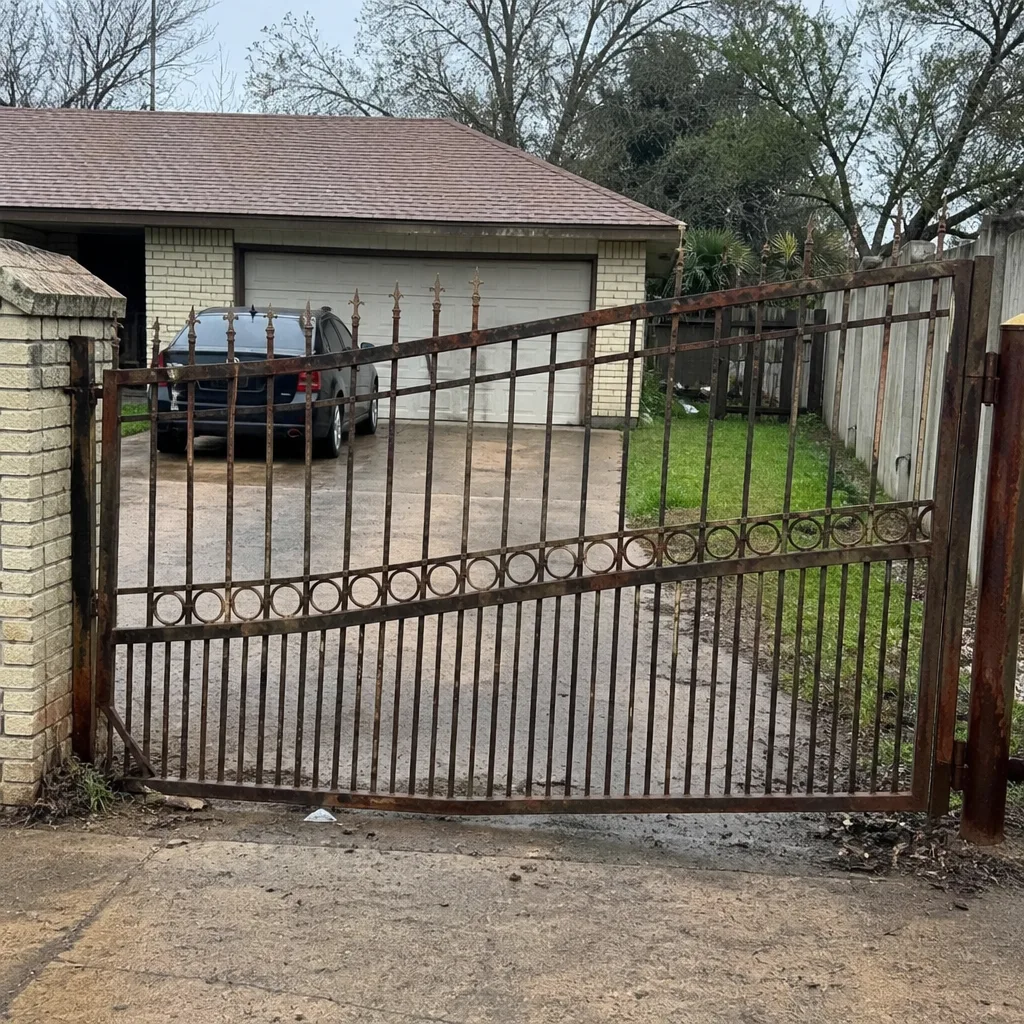 Before
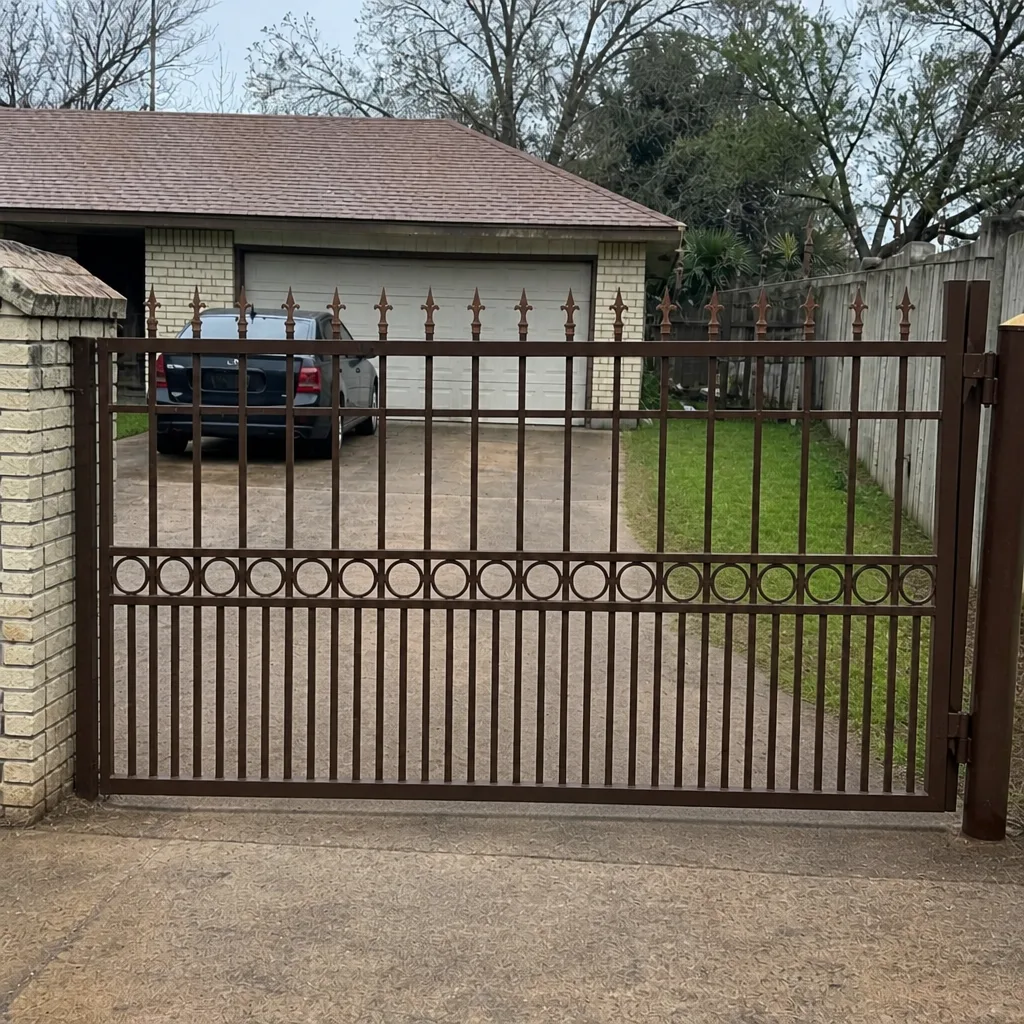 After
Frequently Asked Questions
The most serious signs are a gate that reverses or stops mid-travel, a gate that drifts open or self-closes, a safety edge or obstruction sensor that isn’t responding, a breaker that trips during operation, and rust bleeding from structural welds. These point to safety or structural problems and should be addressed today. A gate that reverses unexpectedly can crush a person or vehicle, and a gate that drifts open is a security fault. Call (855) 772-8171 and we’ll get an estimate scheduled.
A hesitation usually means the operator is fighting resistance, either mechanical or electrical. Put the operator in manual release and move the gate by hand: if it binds or drags, the problem is the gate hardware and the operator is working against it. If it moves freely, the fault is in the operator – a motor, capacitor, gear, or control board issue. Either way, it won’t improve on its own. Call (855) 772-8171 for a free estimate on a diagnosis.
Yes, a gate that drifts open or self-closes is a safety and security fault, not a nuisance. The most common causes in the Pasadena area are post movement from the expansive clay soils, operator limit drift after seasonal settling, and a failing safety edge or loop detector. Until a technician sees it, the safest move is to put the gate in manual release, secure it, and leave it that way. Call (855) 772-8171 to schedule a free estimate.
Mechanical adjustments on hinges, tracks, and rollers are within reach for a careful homeowner, but electrical work on the operator and access panel is not. The control board carries enough current to injure someone, and a wrong move can damage the motor or control board. Any fault that involves error codes, wiring, breakers, or intermittent electrical symptoms should go to a trained technician. Call (855) 772-8171 for a free estimate.
A general walk-around a few times a year is a good habit: check the hinges or track, look for rust on welds and fasteners, watch a full cycle for hesitation or drag, and test the safety edges. Any symptom that persists past one weather cycle deserves a professional inspection. On commercial and HOA gates, inspect more often, because a fault affects everyone who uses the gate. Call (855) 772-8171 to book a free estimate on any suspected fault.
Ask before you book. A specialist who already knows your brand – whether it’s LiftMaster, FAAC, BFT, Linear, or another – diagnoses faster and more accurately than a generalist learning it on the job. At Pasadena Gate Service, we’re certified to service nine leading brands, and we work on the brand that’s already installed rather than pushing you toward a replacement. Call (855) 772-8171 and tell us what’s on your operator and remote.
The Bottom Line
Gates signal failure weeks before they fail, and the signals fall into two clear groups. Movement and safety faults – reversing, drifting, sensor failures, tripped breakers, structural rust, post movement – should be addressed today, because they’re a safety and access risk. Mechanical and convenience faults – noise, hesitation, speed changes, intermittent keypad failures – should be scheduled before they grow into motor or structural work. Watch the gate’s travel, do the manual release test when it hesitates, and check the hardware after the wet-then-dry cycles that are routine in Pasadena. When a symptom persists, it’s not the weather and it isn’t going to fix itself. Call a specialist who knows your brand.
Contact
If you’ve found a symptom on this list and you’re not sure how urgent it is, call us and we’ll tell you plainly. Pasadena Gate Service offers free estimates, upfront pricing, and a price you and we agree on in writing before any work starts. Call (855) 772-8171. We answer 24/7. Fast dispatch from 7am to 7pm, Sunday through Friday.
Written by the team at Pasadena Gate Service.