
Last updated November 15, 2026
 Wrought iron
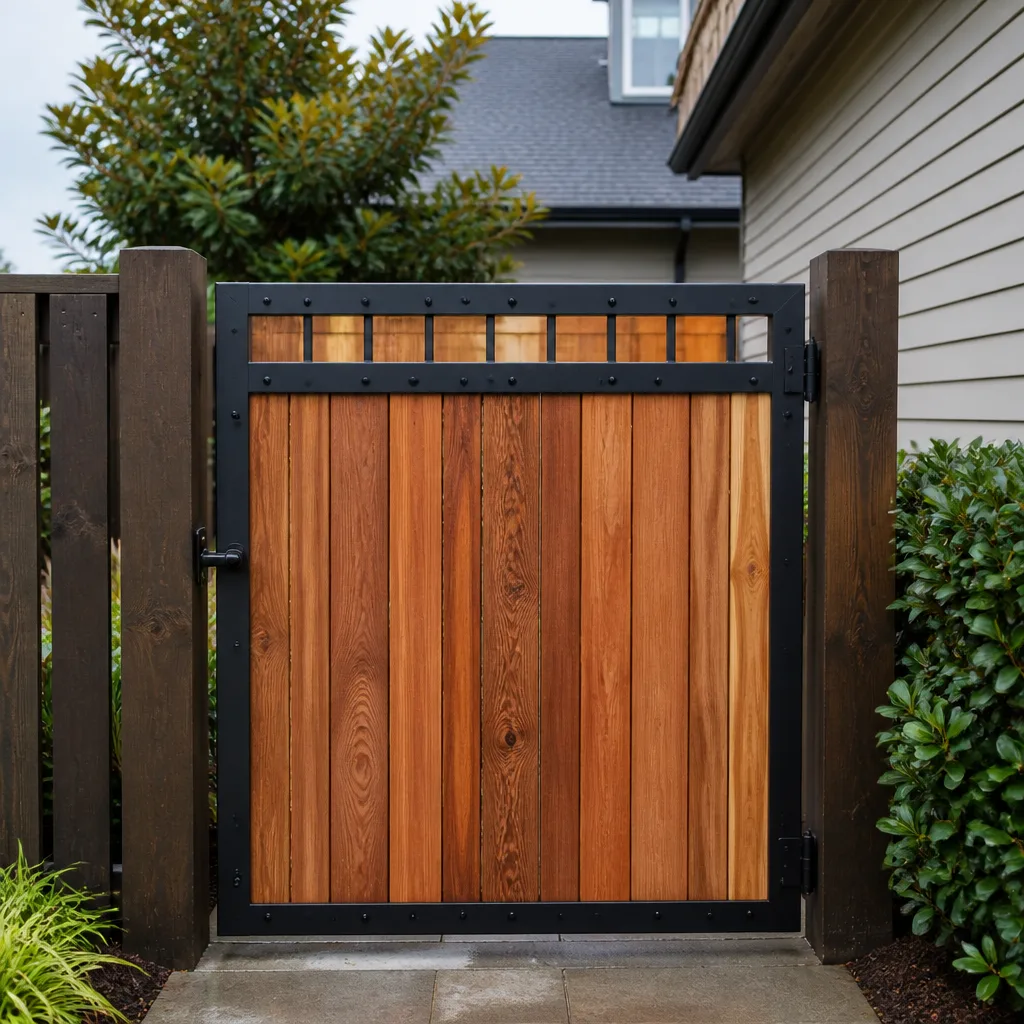 Wood & steel frame
 Farm & ranch
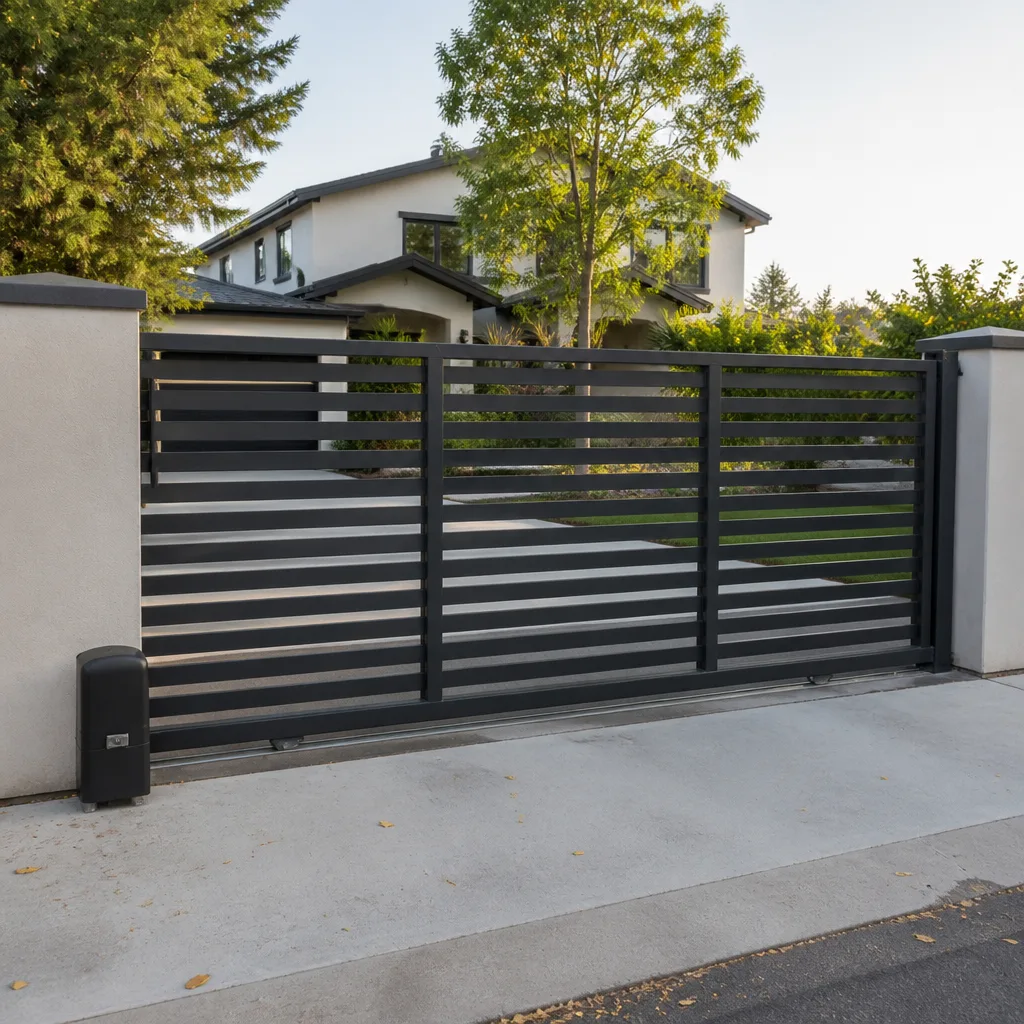 Sliding driveway gates
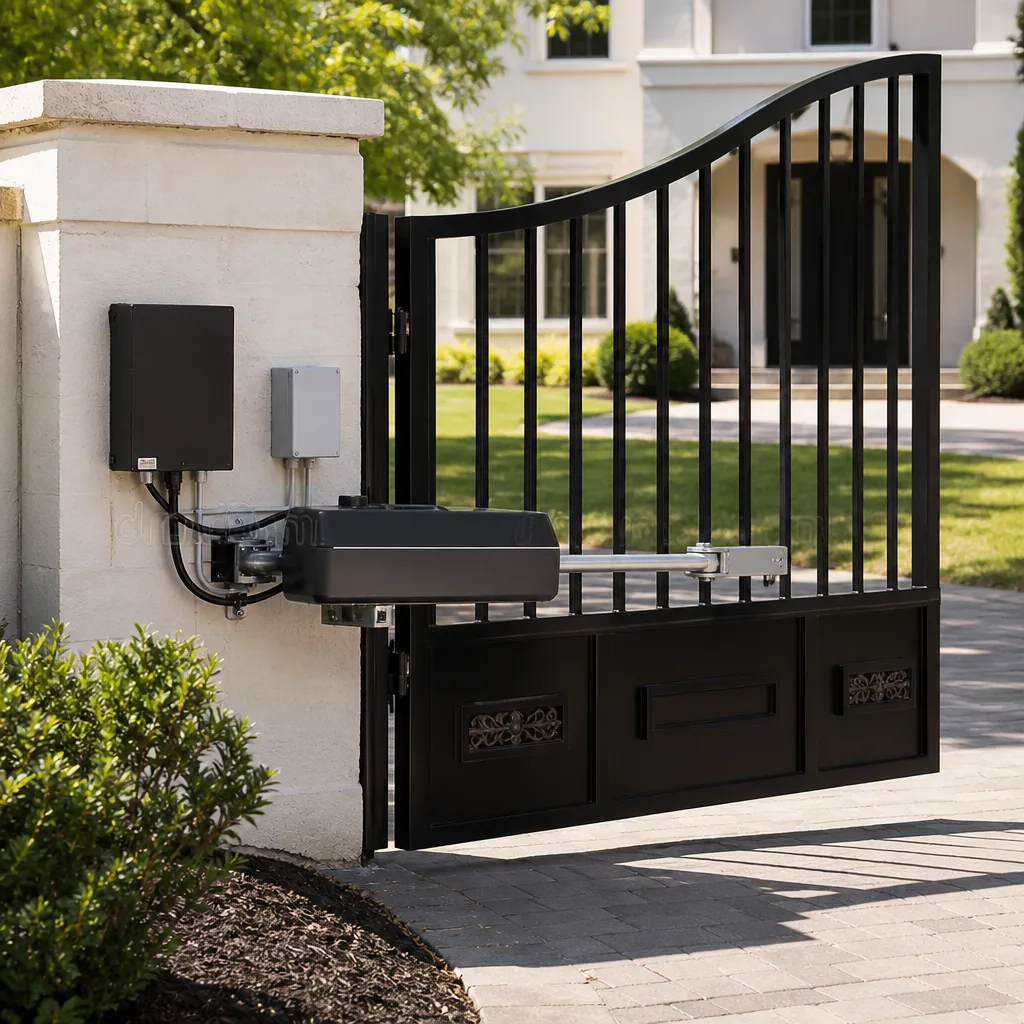 LiftMaster operators
Free on-site gate assessment - hinges, posts, and your LiftMaster or Nice gate operator checked before anything is quoted
The assessment is free and the quote is the invoice.
Get your free estimateGate Repair Maintenance Schedule: What to Do and When
A gate doesn’t fail because it’s old. It fails because the schedule it was maintained on was copied from a climate that doesn’t exist here. Most published gate care guides read as if every property sits in a dry, temperate place, so they push corrosion inspection to some vague “year two” task and never mention what humidity does to a control board enclosure. Pasadena sits in Gulf Coast humidity, where metal oxidizes fast, afternoon storms throw debris into track channels, and the sun cooks gearboxes that a manufacturer tested in milder conditions. This guide lays out a maintenance calendar built around gate type, operator brand, and the specific stresses of a Pasadena property, and gives you three measurements that turn maintenance into failure prediction.
Quick Answer
A working gate maintenance schedule checks the safety sensors and moving hardware monthly, lubricates the correct points on a quarterly cycle for slide gates and a semi-annual cycle for swing gates, inspects the operator enclosure and every fastener twice a year, and tests battery backup before storm season. In Pasadena, front-load corrosion inspection onto every visit rather than saving it for later, and log three readings each time: travel time, motor amp draw, and battery reserve voltage.
Styles & brands we work with
- Wrought iron
- Wood & steel frame
- Farm & ranch
- Sliding driveway gates
- LiftMaster operators
Table of Contents
- Why Generic Gate Schedules Fail in Pasadena
- The Climate-Adjusted Task Calendar
- Maintenance Intervals by Operator Type
- The Three Measurements That Predict Failure
- Lubrication and the Products That Do More Harm Than Good
- Building a Gate Log That Holds Up
- What You Can Check and What Needs a Technician
- Common Mistakes to Avoid
- When to Call a Professional
Why Generic Gate Schedules Fail in Pasadena
Gate hardware wears on a predictable curve, but the slope of that curve is set by environment and use, not by a calendar printed in a manual. A gate spec sheet lists intervals for a median climate. Pasadena isn’t median. The wet season brings sustained humidity, the ground stays saturated for stretches, and vegetation grows fast enough to put vines and grass against track channels between visits. That means oxidation, debris fouling, and enclosure degradation all happen sooner than the manual suggests.
There’s a second reason generic schedules miss: they treat all automated gates as one thing. A swing operator and a slide operator share almost nothing in the way of wear points. A barrier arm operator is a different machine again. A schedule built for one doesn’t serve the others.
We work on gates from Pasadena Gate Service customers on swing, slide, and barrier systems from LiftMaster, FAAC, Elite, Mighty Mule, and other manufacturers, and the pattern is consistent. The gates that fail early aren’t the ones with the most traffic. They’re the ones maintained on a calendar that never accounted for the climate. Our technicians have up to 15 years of experience, and much of what they do on a maintenance visit is reset the schedule to match what the gate is actually experiencing.
What follows is that reset. It’s written for homeowners, HOA managers, and commercial property owners in Pasadena who would rather predict a failure than discover one.
The Climate-Adjusted Task Calendar
Here’s the sequence. It front-loads the tasks that Pasadena conditions make urgent and pushes the ones that matter less in this geography to a slower cycle. Read it as the order of priority on any visit, not as a strict monthly script.
Monthly (priority one)
- Safety sensor test. Trip the photo-eye or edge sensor and confirm the gate reverses. This is the single most important check on an automated gate, and it belongs on every month’s list.
- Track and channel debris sweep. Clear leaves, twigs, and grass from the track on a slide gate and from the travel path of a swing gate. Pasadena’s storm season fills channels quickly.
- Oxidation spot-check. Look at hinges, rollers, latch points, and the anchor plates for the first sign of rust bloom. Catch it early and it stays a spot. Miss it and it becomes a replacement.
Every two to three months
- UV degradation check on the operator enclosure. Sun exposure makes plastic enclosures brittle and fades the gaskets that keep humidity out. Look for cracking, discoloration, or a lid that no longer seats.
- Fastener torque pass. Bolts on hinges, posts, and the operator mount loosen with vibration and with ground movement. A quick pass keeps the geometry from drifting.
- Battery backup health check. More on the measurement below, but the visual check belongs here.
Twice a year
- Control board and enclosure inspection. Open the enclosure, look for moisture, insect intrusion, and corrosion on the board terminals.
- Full lubrication cycle on the points mapped to your operator type.
- Post and foundation check. Confirm posts are plumb and hardware is tight.
Annually
- Manual release test. Confirm the gate can be released and moved by hand. This is your fallback in a power failure.
- Full electrical and control system review. This is where a specialist should be involved.
Maintenance Intervals by Operator Type
Swing, slide, and barrier-arm operators each wear on their own cycle. A schedule that treats them the same leaves the wrong points unchecked. Here’s how the intervals and wear milestones differ.
Swing operators
A swing operator drives an arm that pivots the gate panel. The wear concentrates in the operator arm joints, the hinges on the gate post, and the gearbox inside the housing. Swing gates generally tolerate a semi-annual lubrication cycle on the arm pivots and hinges, with a monthly check of the hinges for play. The higher the traffic, the sooner the pivots need attention. The wear-cycle milestone to watch is arm joint play; once you can feel movement in the joint, the gearbox is working harder to compensate.
Slide operators
A slide operator runs the gate along a track, and the wear concentrates in the track, the rollers, and the drive gear. Slide tracks need a quarterly lubrication cycle that’s specific to the track material, plus a cleaning before every lubrication pass. A slide gate accumulates more debris in its track than any other type, and in Pasadena that means frequency matters more than volume. The wear milestone is roller flat-spotting and track grooving; both show up as a change in travel time.
Barrier-arm operators
A barrier arm operator is a different animal. It moves a counterbalanced arm up and down, and the wear concentrates in the pivot bearings, the balance springs on the arm, and the drive mechanism. Barrier arms benefit from a quarterly pivot inspection and a semi-annual lubrication pass on the arm mechanism. The wear milestone is balance drift; when the arm stops holding its position cleanly, the drive is being asked to do work the counterbalance should be doing.
We service the full range, and knowing the difference between a LiftMaster swing operator and a FAAC slide operator means the technician arrives familiar with the exact system on-site rather than guessing at the interval. That’s the point behind our gate repair work: diagnosis first, solution second.
The Three Measurements That Predict Failure
Routine inspection tells you what a gate looks like today. Three simple readings tell you where it’s heading. A property manager who logs these at every maintenance visit builds a trend line that flags a failing component before it stops working.
- Travel time. How long it takes the gate to run from fully open to fully closed. A gate that slowly lengthens its travel time has a dragging track, a worn roller, or a motor working harder than it should. An increasing number is the first signal to investigate.
- Motor amp draw. The current the motor pulls while running. Amps climb as friction increases. A reading that trends upward over two or three visits points to a mechanical problem that hasn’t yet shown up visually. A reading that spikes suddenly is a fault or an obstruction.
- Battery reserve voltage. The resting voltage of the operator’s backup battery after a short rest. A battery that reads lower over time is losing capacity and will fail to back up the gate during a power outage when you need it most.
These three numbers are the difference between a maintenance visit that’s a visual inspection and one that’s a prediction. Without them you spot trouble when it becomes visible. With them you spot trouble when it becomes measurable, which is almost always earlier.
We log these on our maintenance and electric gate repair visits because the trend is what matters. A single reading tells you where the gate is. A series of readings tells you where it’s going.
Lubrication and the Products That Do More Harm Than Good
Lubrication is the task most often done wrong, and the wrong product damages more gates than skipping lubrication entirely. The issue is chemical compatibility: some products attack the very parts they’re meant to protect.
What to avoid
- Petroleum-based sprays on the track and rollers. These attract and hold dust and fine debris, forming an abrasive paste that wears rollers faster than running them dry.
- Products that attack elastomer seals and gaskets. Certain solvents swell or soften rubber seals and gaskets, and the damage shows up as leaks and moisture intrusion well after you’ve moved on.
- White grease on the operator’s internal gearbox. Unless the operator’s documentation calls for it, the wrong internal lubricant can work its way into the motor windings or damage the gear material.
- One product on everything. The track, the hinges, the operator arm, and the gearbox almost never want the same product.
What to do instead
Use the lubricant the operator documentation specifies for the interior mechanism, and a dry-film or silicone-based product for tracks and rollers where it won’t attract debris. Wipe the track clean before applying anything. For swing gate hinges, a light general-purpose lubricant on the pivot points is usually appropriate, applied sparingly.
The right product depends on the brand. We’re experienced with the specific requirements of LiftMaster, FAAC, BFT, Linear, Viking, Ghost Controls, DoorKing, Elite, and Mighty Mule systems, and the technicians who maintain your gate are familiar with the operator already installed. We aren’t incentivized to sell you a brand, so we work on your brand, whatever it is.
Building a Gate Log That Holds Up
A maintenance log is only useful if it’s credible. A dated record of inspections, readings, and repairs turns a vague “we maintain our gate” into documented proof. That matters for three reasons: warranty claims, HOA compliance requests, and knowing what was done and when.
Here’s how to build one that holds up.
- Start with a gate profile page. Record the operator make and model, the gate type (swing, slide, or barrier), the installer, and the install date if you can find it. This is the reference page every later entry builds from.
- Log every visit with a date. Include who performed the visit, what was checked, and what was found. A meaningful entry is short but specific: “Safety sensors tested, both passed. Travel time 12.1 seconds, amp draw 3.2, battery resting 24.6 volts. Track cleared. No corrosion noted.”
- Record the three measurements every time. The trend line is the whole point. A log without the numbers is a diary. With the numbers it’s a prediction tool.
- Log any repair with the part and the reason. Note the part replaced, the symptom that led to the replacement, and the reading that pointed to it. This is what turns an HOA request into a five-minute answer.
- Keep a photo set from each inspection. Date the photos and keep them with the log entry. A photo of a resting track before and after cleaning documents the condition at each stage.
- Store it in one place. A shared file that the property manager, HOA, and service company can all access prevents the “we weren’t told” problem when a warranty question comes up.
We’ve seen a good log save a property owner a full operator replacement. When a warranty question came up, the dated readings proved the gate had been maintained and the failure wasn’t neglect. That’s the value of a log that records specifics instead of a checkmark.
What You Can Check and What Needs a Technician
Not everything on the schedule belongs to a professional. Some tasks are simple, safe, and worth doing yourself. Others carry real danger and belong to someone with training.
What you can safely check
- Clear debris from the track and travel path.
- Visual inspection for rust, cracking, or loose hardware.
- Test the safety sensors by deliberately tripping them and confirming the gate reverses.
- Check the backup battery for visible corrosion or swelling.
- Confirm the gate can be released manually and moved by hand.
What needs a trained technician
- Anything involving the operator’s electrical wiring or power. These systems carry a real risk of shock. Do not open the control enclosure to probe wiring unless you are trained and the power is safely isolated.
- Adjusting the operator’s motor limit or force settings. Done wrong, these put the gate’s safety function at risk.
- Replacing control boards, motors, or limit switches. The components are specific to the brand and the model.
- Heavy gate panels and slide gates that have come off the track. A fallen panel can crush a hand or a foot and should be handled by two trained people with the right equipment.
- Anything involving the safety edge or the photo-eye wiring. A badly wired safety sensor is worse than no sensor, because it gives a false sense of protection.
Our Pasadena customers often ask whether they can handle the electrical side themselves. The honest answer is that the mechanical checks are usually safe, and the electrical side is where a small mistake creates a serious hazard. This trade has no safe shortcuts around live wiring.
Common Mistakes to Avoid
- Following a generic climate calendar. A schedule built for a dry, temperate place under-schedules corrosion inspection and lets rust take hold before anyone checks. Reset the schedule to local conditions.
- Lubricating the track with the wrong product. Petroleum-based sprays attract debris and wear rollers faster than dry running. Use a product that doesn’t hold dust, and wipe the track before applying anything.
- Ignoring the operator enclosure. Pasadena sun degrades plastic and gaskets, and once humidity gets inside the control board is at risk. Check the enclosure on every visit and seal it when the gasket starts to fade.
- Skipping the safety sensor test. A sensor that fails silently gives no warning and leaves the gate with no protection against closing on a person or vehicle. Test it monthly, without exception.
- Logging maintenance without the three measurements. A checkmark that says “inspected” tells you nothing about trend. Without travel time, amp draw, and battery voltage you’re spotting failures only after they show visibly.
- Pushing a replacement when the actual problem is a single component. A technician who can’t diagnose the brand installed on-site often recommends replacing the whole operator. A brand-agnostic specialist can usually repair the specific part.
- Assuming a generalist can maintain an operator. A handyman who handles gates on the side may not know the specific lubrication points, safety settings, or fault codes of an FAAC, Elite, or Mighty Mule system. That’s where the specialist line matters.
When to Call a Professional
Some symptoms need a trained eye. If the gate reverses slowly or not at all when you test the safety sensors, stop using the gate until a technician checks it. If you hear a grinding or popping sound during travel, that’s a mechanical problem that gets worse the longer you run it. If the gate stops mid-travel, moves erratically, or won’t complete a cycle, the motor or control board is suspect, and that work belongs to someone trained on the specific brand. If the manual release no longer moves the gate by hand, the mechanical side has a real problem. If the operator enclosure is cracked, moisture has likely gotten to the control board already. And if you’ve logged the three measurements and seen any of them change sharply, that’s a signal to call before the next failure.
Pasadena Gate Service offers free estimates in Pasadena – call (855) 772-8171. We answer 24/7. Fast dispatch from 7am to 7pm, Sunday through Friday. A call outside dispatch hours is booked into the next opening.
See the difference
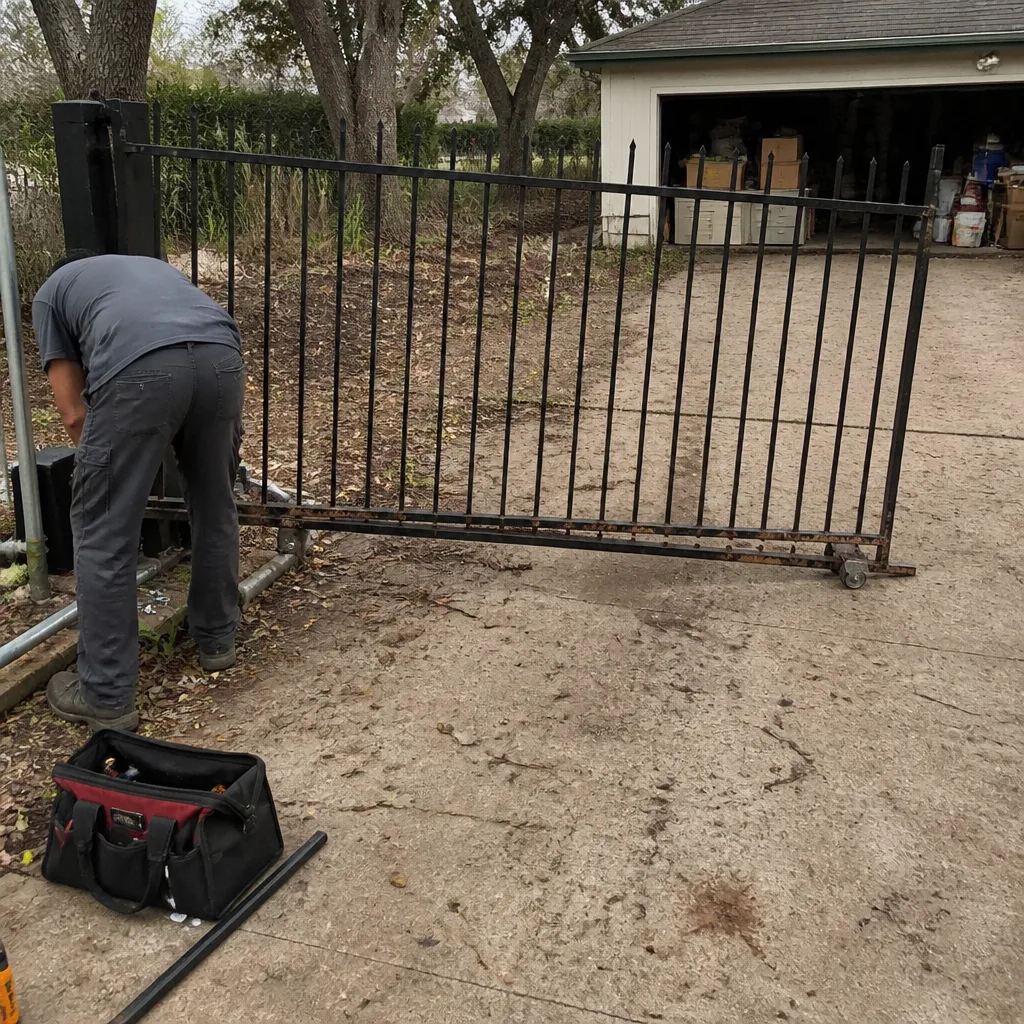 Before
 After
 Before
 After
 Before
 After
Frequently Asked Questions
Most automated gates in Pasadena need a professional service visit at least twice a year, with monthly safety sensor and debris checks done between visits. The wet, humid season is when corrosion and debris accumulate fastest, so front-load inspection during those months. A heavily used commercial gate should be looked at more often than a residential gate with light traffic.
The safety sensor test is the most important task on any Pasadena maintenance schedule. A working sensor is the difference between a gate that stops when something is in the way and one that keeps closing. Test it monthly, and call a technician the moment a sensor fails.
You can lubricate the track, rollers, and hinges yourself if you use the correct product. The internal gearbox, the operator mechanism, and anything electrical should be handled by a technician with the right product for your brand. A wrong lubricant in the wrong part of the operator does more damage than skipping lubrication entirely.
Three measurements: travel time, motor amp draw, and battery reserve voltage. These three numbers turn a maintenance visit into failure prediction, because the trend over several visits shows a component degrading before it fails. Log them with the date and a short note about what was checked and what was found.
Humidity, storm debris, and UV exposure all stress a gate faster here than in a dry, temperate climate. Corrosion starts sooner, track channels fill faster, and plastic enclosures and gaskets degrade in the sun. The tasks on this schedule are sequenced to put those checks first, rather than burying them in a generic year-two task.
For any work involving the operator, the control board, the wiring, or the safety sensors, use a gate specialist. A generalist may not know the specific settings and wear points of your brand, and an incorrect safety setting is a hazard. For simple debris clearing and visual checks, you can do those yourself. Call (855) 772-8171 for a free estimate on professional maintenance.
The Bottom Line
The maintenance schedule that actually protects a gate is the one built around its type, its operator brand, and where it stands. In Pasadena that means front-loading corrosion and UV checks, because the climate drives the wear. It means different lubrication intervals for swing, slide, and barrier systems, because each wears differently. It means logging travel time, motor amp draw, and battery reserve voltage, because those numbers predict failure before it happens. And it means building a credible gate log that holds up for warranty and HOA questions. A gate maintained on this schedule outlasts one maintained on a generic calendar, and a gate specialist can set the schedule up in a single visit.
Call (855) 772-8171 for a free estimate. We answer 24/7. Fast dispatch from 7am to 7pm, Sunday through Friday. Whether your gate needs a maintenance reset, a repair, or a full installation, our team works on your brand, whatever it is, so the schedule fits the gate you actually have. Pasadena Gate Service is a gate specialist, and our technicians have up to 15 years of experience with the systems that keep a Pasadena property secure.
Written by the team at Pasadena Gate Service.