
Last updated November 15, 2026
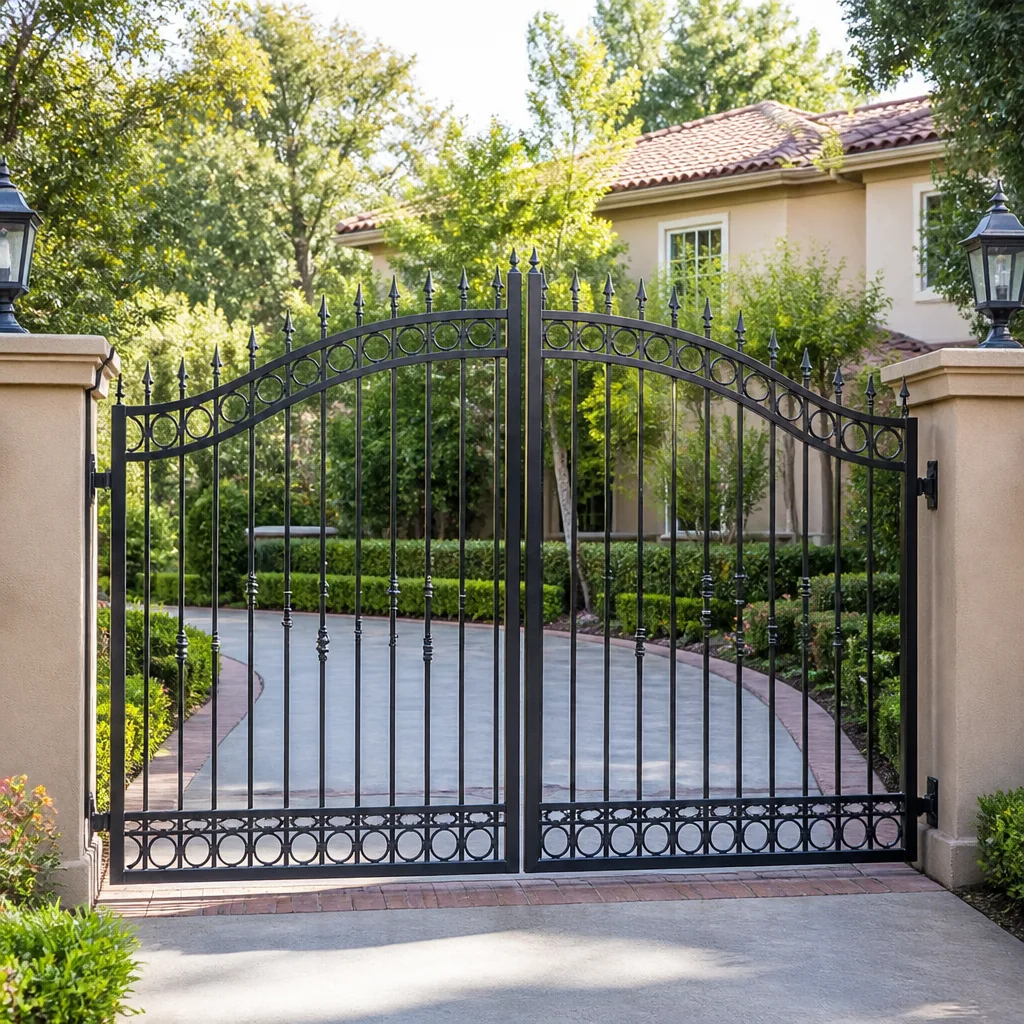 Wrought iron
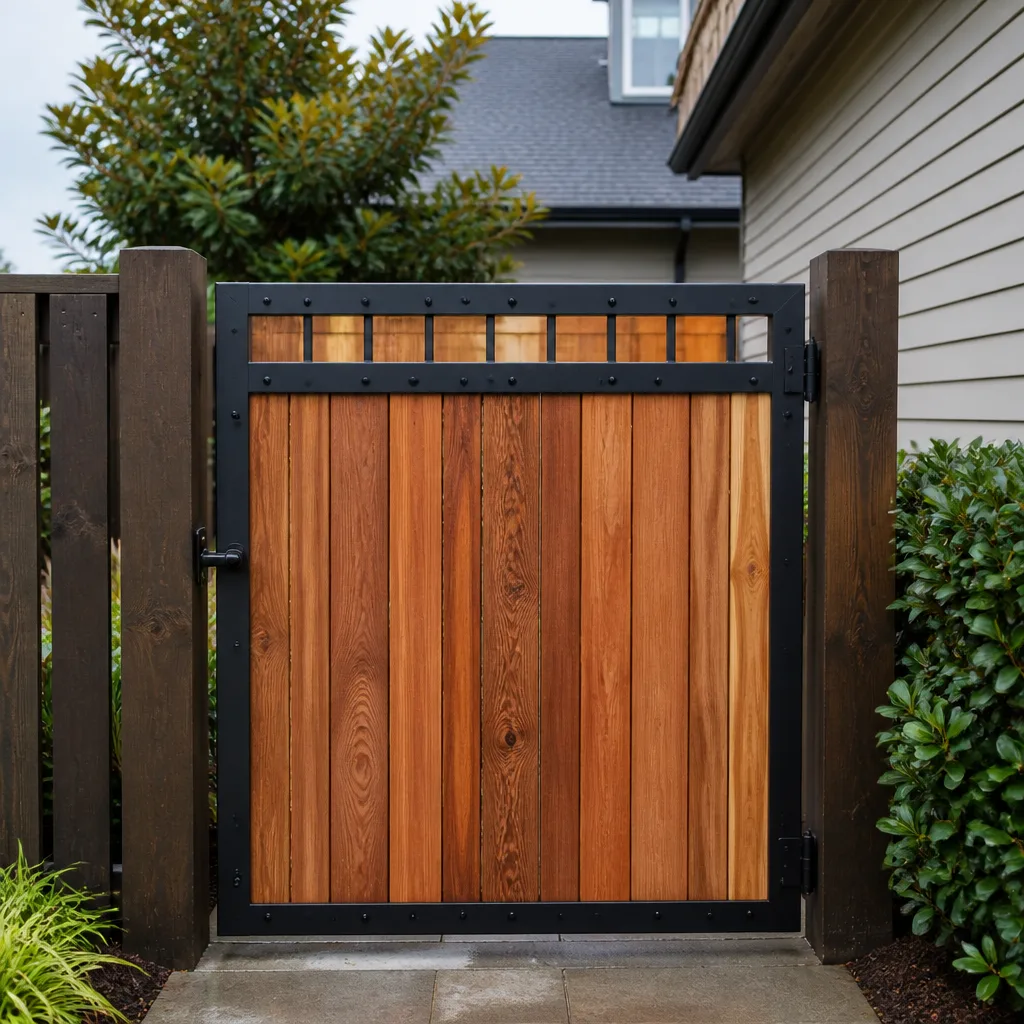 Wood & steel frame
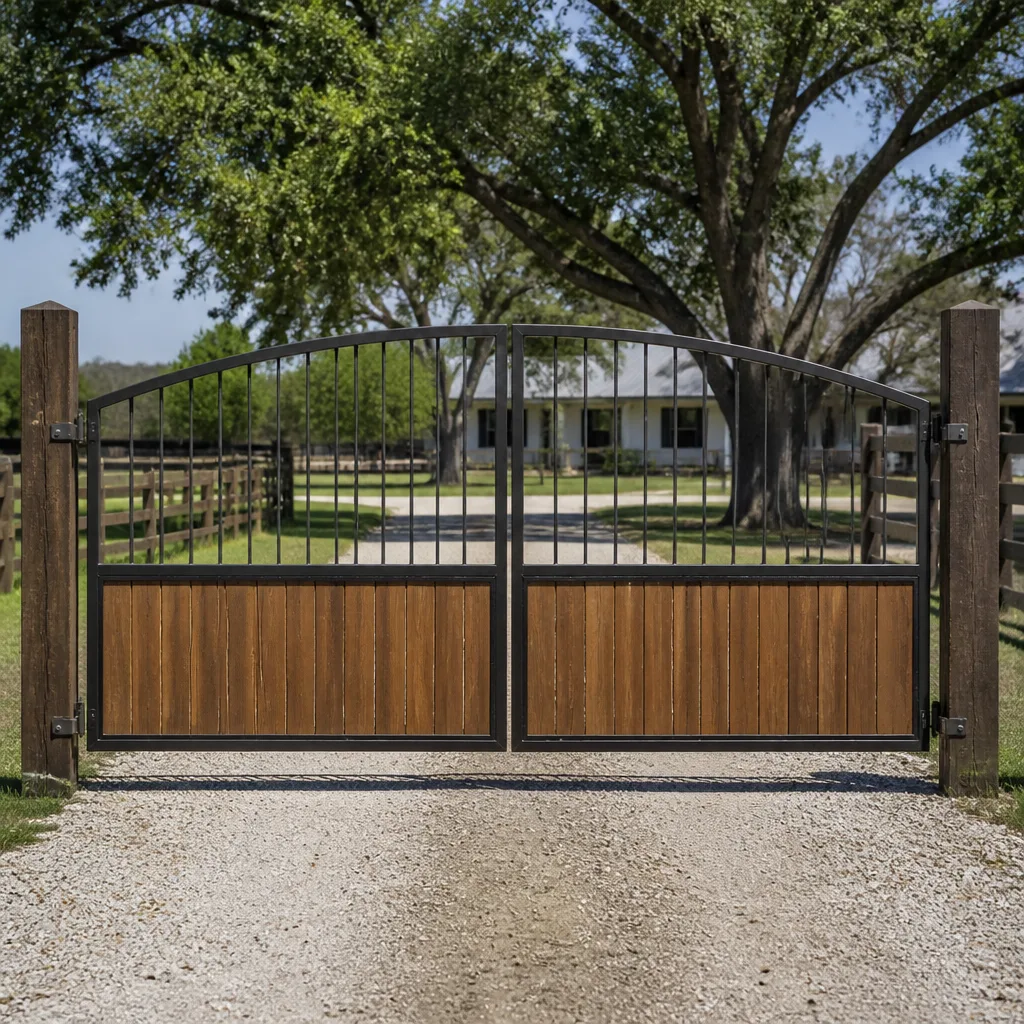 Farm & ranch
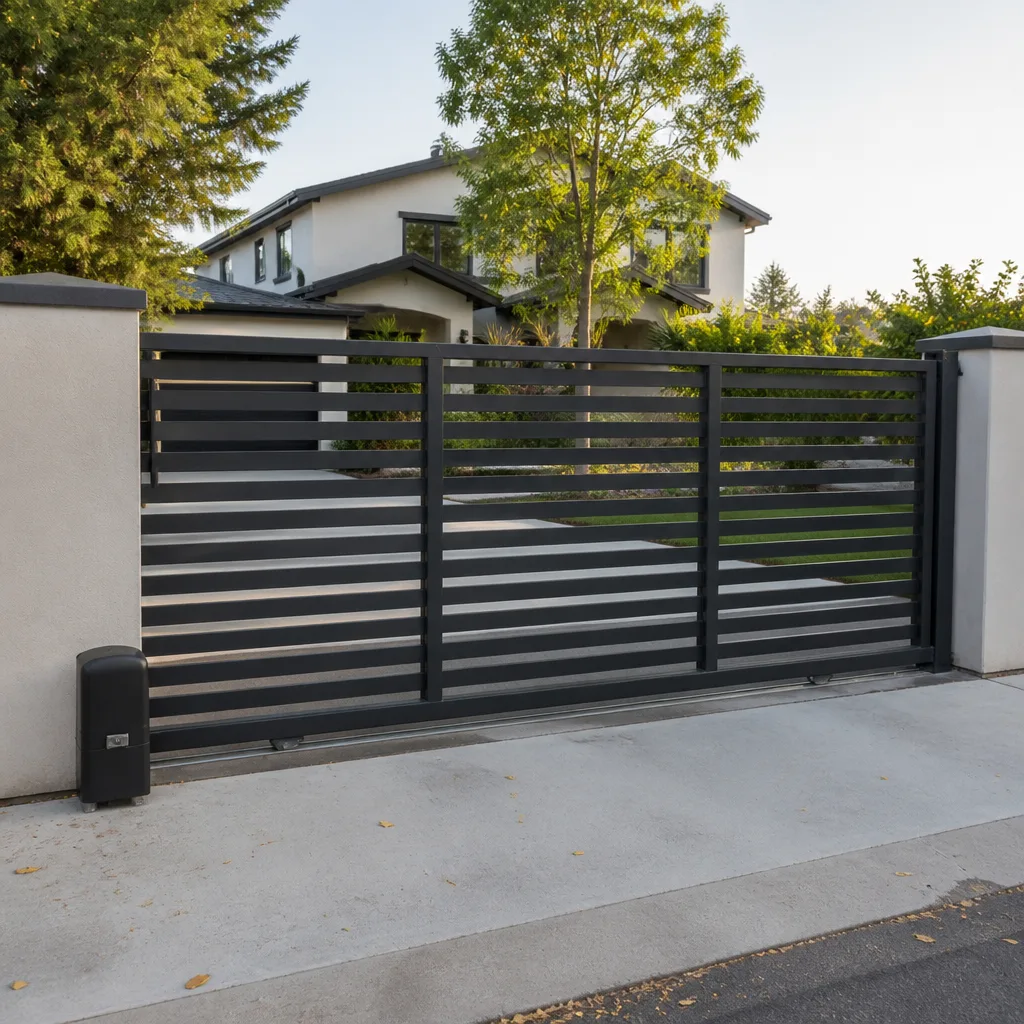 Sliding driveway gates
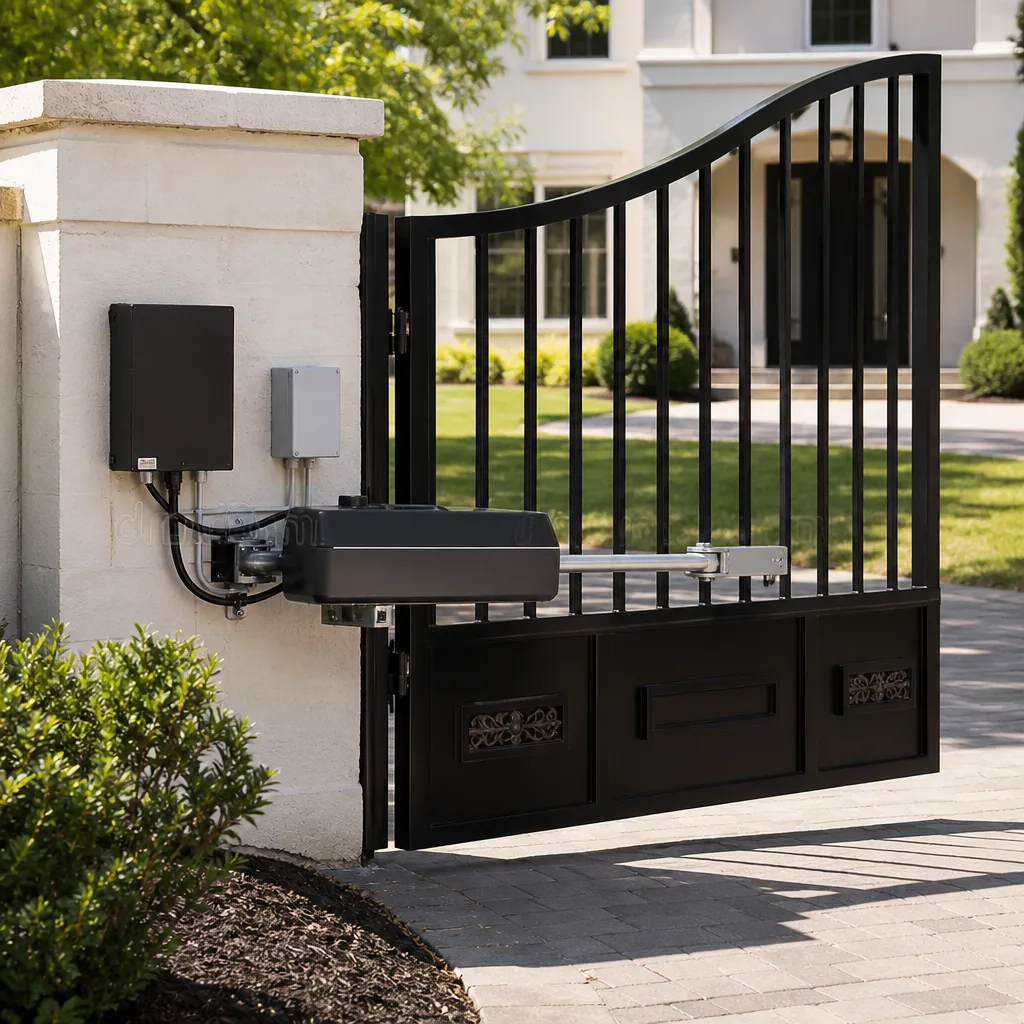 LiftMaster operators
Free on-site gate assessment - hinges, posts, and your LiftMaster or Nice gate operator checked before anything is quoted
The assessment is free and the quote is the invoice.
Get your free estimateThe Complete Guide to Gate Repair in Pasadena
A gate that grinds, drifts, or reverses unexpectedly isn’t malfunctioning at random. It’s telling you exactly what’s wrong. The trouble is that most gate advice online skips the diagnosis and jumps straight to the fix, so people end up adjusting the operator when the real culprit is a post that’s shifted, or replacing a motor when the actual problem is a corroded connection. We work on gates across Pasadena, and the pattern is consistent: the symptom rarely points where homeowners expect. This guide walks through the root causes we see most often, how to tell them apart, and how to know whether you’re looking at a repair or a rebuild. You’ll finish it ready to have a real conversation with a technician.
Quick Answer
Gate repair in Pasadena usually divides into three buckets: mechanical failures (worn hinges, sagging posts, dropped rollers), electrical and operator failures (dead control boards, motor burnout, loop detector faults), and structural problems tied to soil movement and humidity. Matching the symptom to the right bucket before you touch anything is the single most important step, because adjusting an operator on a misaligned gate makes the problem worse. A trained gate specialist can usually identify the root cause during a diagnostic visit and tell you in plain terms whether you need a repair, a part, or a re-engineered install.
Styles & brands we work with
- Wrought iron
- Wood & steel frame
- Farm & ranch
- Sliding driveway gates
- LiftMaster operators
Table of Contents
- Why Gates Fail in Pasadena
- Clay Soil, Post Shift, and Why Adjusting First Makes It Worse
- The Corrosion Timeline: Surface Rust vs. Structural Compromise
- Your Existing Brand Dictates Which Parts Will Hold Up
- Repair vs. Re-Engineering: How to Tell the Difference
- When a Small Electrical Fault Becomes a Liability
- The Diagnostic Sequence We Use
- Residential, HOA, and Commercial: Different Stakes, Same Skills
- Common Mistakes to Avoid
- When to Call a Professional
- Frequently Asked Questions
Why Gates Fail in Pasadena
Most gate failures we diagnose in Pasadena come down to three forces working against the system at the same time: humidity, expansive clay soil, and hardware that was spec’d for a milder environment. The Houston metro sits in a stretch of Gulf Coast climate that keeps gates wet for weeks at a stretch, and the ground under most properties is a heavy clay that swells when it’s wet and shrinks when it’s dry. A gate isn’t sitting still on that ground. It’s riding it.
Here’s how those forces express themselves in the field:
- Humidity and corrosion attack hinges, fasteners, and the bottom rail of steel gates. Paint failures start small and expand fast when moisture is trapped underneath.
- Clay soil movement shifts post footings by fractions of an inch during wet and dry cycles. That’s enough to throw a sliding gate off its track alignment and put a swing gate into the frame.
- Thermal cycling across summer heat pushes operators to their duty limits, especially on gates that cycle dozens of times a day.
- Mismatched replacement parts from a previous repair change the load profile of the whole system, and the symptoms show up months later at the next weakest component.
We see gates in Pasadena that are trying to do three jobs at once: hold a boundary, control access, and stand up to weather. Any one of those can fail first, and the failure can look identical from the driver’s seat. That’s the reason diagnosis-first matters more than rushing to a replacement.
Clay Soil, Post Shift, and Why Adjusting First Makes It Worse
Expansive clay is the biggest hidden cause of gate misalignment in Pasadena, and it’s the one most homeowners skip when they call for service. When soil moisture changes, posts move, and the gate frame is suddenly out of square. The operator doesn’t know any of that. It’s just trying to push a gate that no longer travels cleanly through the same arc it used to.
The instinct for many people is to adjust the operator or the limits to force the gate to close. That’s the wrong order of operations. Here’s why:
- You’re masking the real problem. The motor is compensating for a mechanical fault. You’ll get a temporary fix until the motor fails or the controller throws a fault.
- You’re accelerating wear. Forcing a misaligned gate through its arc strains the operator, the hinges, and the track simultaneously.
- You’re creating a safety issue. An operator tuned around a bad alignment can miss a reversal command or close on an object it shouldn’t.
- You’re making the eventual repair more expensive. What starts as a post adjustment becomes an operator replacement plus a mechanical repair.
The correct order is alignment first, mechanical travel second, operator limits third. If the post footings are the problem, we specify proper footing depth and re-align the frame before touching the electronics. It’s a slower first step that saves money on the second.
The Corrosion Timeline: Surface Rust vs. Structural Compromise
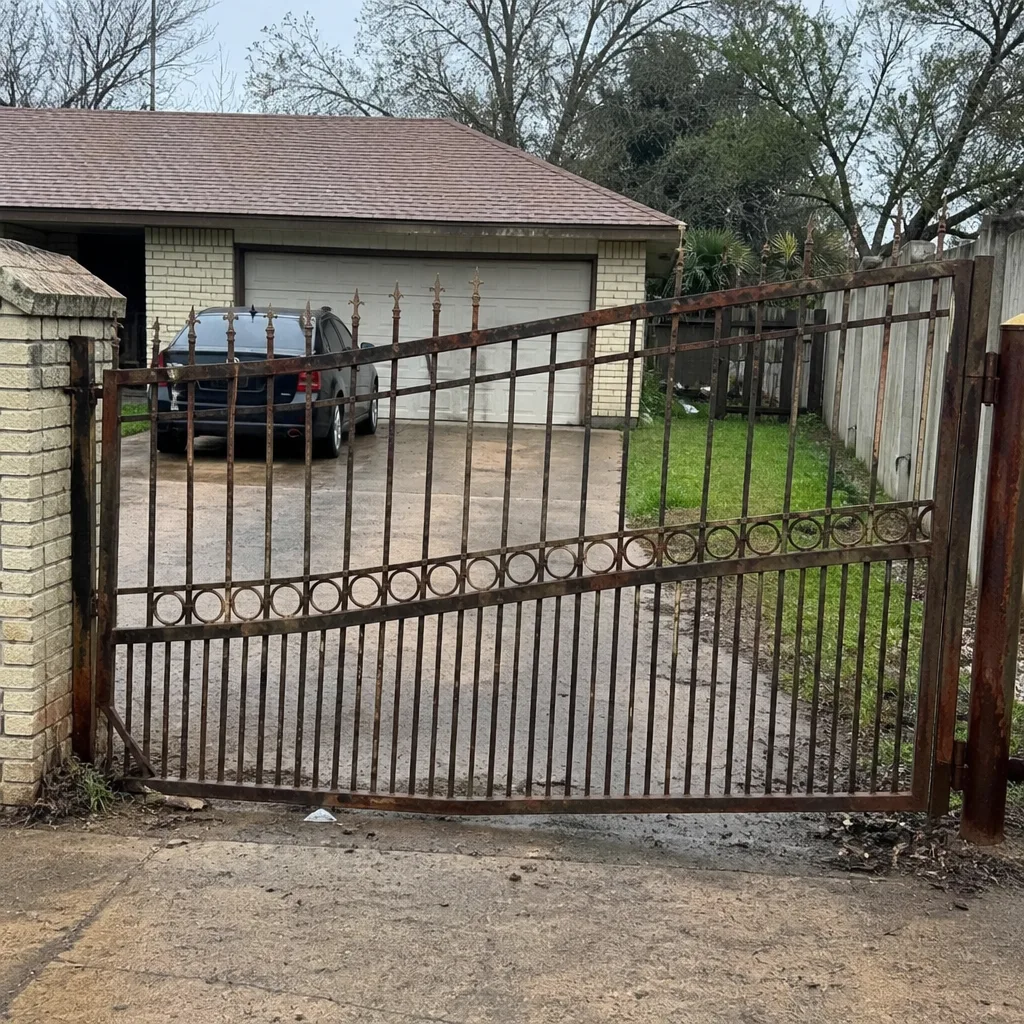
Corrosion on a gate in Pasadena isn’t a yes-or-no question. It’s a question of how far it’s gone. The Gulf Coast climate pushes rust through the surface within a few seasons on unpainted steel and accelerates much faster on gates with paint failures. Knowing what you’re looking at determines whether you’re scheduling a paint touch-up or planning a replacement.
The three stages we track
- Stage one: surface oxidation. Orange bloom on fasteners, hinges, or the bottom rail. The metal is intact. Clean, prime, and recoat, and you’re usually fine.
- Stage two: pitting and paint failure. Rust has begun eating into the metal surface. Fasteners show thinning. This is where hinge replacement and spot repair become necessary, because the load paths are weakening.
- Stage three: structural compromise. Rust has penetrated tube walls or the bottom rail. The gate frame flexes noticeably when you push on it. At this point you’re not repairing a finish, you’re repairing structure, and on a full-frame gate that often means replacement.
Regular inspection is the cheapest maintenance you can do for a gate in Pasadena. Every few months, run your hand along the bottom rail and hinge side. Feel for pitting. Look for paint blisters. Catch it at stage one and it’s a weekend job; catch it at stage three and it’s an install.
Your Existing Brand Dictates Which Parts Will Hold Up
Every gate operator has a fingerprint: a specific control board layout, a specific set of limit switches, a specific motor spec. When a generalist arrives at a gate they’ve never touched, the first visit is often a discovery tour. When a specialist arrives at a LiftMaster or a FAAC system, the repair path is already known. That difference matters more than most people realize, because brand determines which replacement parts will actually survive the local climate.
We work on nine of the major gate brands as a matter of routine, including LiftMaster, FAAC, BFT, and Linear. The practical upshot for a homeowner in Pasadena:
- Parts fitment. Control boards, receivers, and safety sensors are usually brand-specific. A universal substitute may install but rarely lasts the way an OEM-equivalent part does.
- Load profile. A motor designed for a lighter gate will fail early when installed on a heavier one, and the failure shows up as a burned controller or a stripped gear set.
- Firmware and limit logic. Some brands use physical limit switches, others use encoder-based positioning. Mixing those up during a repair leaves you with software faults after the mechanical fix.
You don’t need to install the same brand you currently have, but you do need to understand it before you change it. A repair that respects the existing system usually costs less and holds up longer than a replacement that starts over.
Repair vs. Re-Engineering: How to Tell the Difference
Not every gate problem is a repair problem. Sometimes the gate, the posts, and the operator are working exactly as designed, and the design no longer fits the site. That’s when you need re-engineering, and treating it as a repair only pushes the cost down the road.
Repair territory
- A single component has failed (motor, board, hinge, roller, sensor).
- The gate still travels cleanly when moved by hand.
- Posts are plumb and the frame is square within tolerance.
- Operator settings haven’t been changed since the original install.
Re-engineering territory
- Multiple posts have shifted and the gate can’t be brought back into alignment by adjustment alone.
- The grade under the gate has changed, so the gate swings into a slope or a curb instead of clearing it.
- The operator has been replaced more than once without addressing a structural cause.
- The property’s use has changed (a new driveway, a new access road, an added HOA entry lane) and the original hardware is now underpriced for the traffic.
Re-engineering means new post footings, corrected grade, and hardware rated for the actual use. It costs more upfront than a repair, and it costs far less than three repairs in a row that don’t solve anything.
When a Small Electrical Fault Becomes a Liability
An electric gate is a moving machine with line voltage inside the controller cabinet. A small electrical fault isn’t just an inconvenience; it’s a liability question for anyone who owns the property. The problem is that electrical faults rarely advertise themselves as electrical. They show up as intermittent behavior, a gate that reverses at odd moments, or a keypad that works in the morning and doesn’t work in the afternoon.
The faults that most often move from “annoying” to “liability” are:
- Loop detector drift. The gate stops recognizing that a vehicle is present, or worse, fails to recognize a vehicle exiting, so it closes on a car.
- Safety edge failure. The edge looks intact but the internal contact is broken. The gate reverses because the controller sees a fault, but only sometimes.
- Controller water intrusion. A sealed cabinet with a compromised gasket traps humidity inside instead of keeping it out. Boards corrode slowly, throw soft faults, and then fail hard.
- Improper bonding and grounding. A short in a motor or a surge on the line finds a path it shouldn’t. That’s a shock hazard and a fire risk, not just a repair call.
If a gate in Pasadena is doing anything intermittent with its safety sensors or its access system, treat that as a priority. It’s not the kind of thing you test by standing near the gate and hoping the beam catches.
The Diagnostic Sequence We Use
Diagnosis first, solution second. That’s the method, and it applies to every gate we work on. Here’s the sequence in plain terms, so you know what to expect from a knowledgeable visit to your property.
- Walk the gate by hand. Disconnect or disengage the operator and move the gate through its full travel. If it binds, drags, or refuses to stay open, the fault is mechanical.
- Check post plumb and frame square. A spirit level on the posts and a diagonal measurement on the frame catch most of the clay-soil misalignment cases.
- Inspect the hinges, rollers, and track. Corrosion and wear show here first. Replace what’s worn rather than adjusting around it.
- Power up and observe the operator behavior. Listen for strain. Watch the limit stops. Note any hesitation or retry pattern.
- Test access control end to end. Keypad, remote, phone entry, driveway loop. Each input goes through its own path to the controller and each can fail separately.
- Check the safety devices. Photo eyes, safety edges, and loop detectors get tested against a physical obstruction, not just a code command.
- Inspect the cabinet. Seal condition, board condition, terminal tightness, wire routing, and grounding.
- Report and estimate. Find the root cause, explain it, and quote the repair in writing before any work begins.
If you want a broader look at what the repair side of that sequence typically covers, our gate repair page walks through the parts and outcomes. For the electrical side in depth, see our writeup on electric gate repair.
Residential, HOA, and Commercial: Different Stakes, Same Skills
Gate work in Pasadena covers a wide range of properties and a wide range of consequences when something fails. A residential driveway gate that sticks is a morning inconvenience. An HOA entry gate that fails during rush hour is a queue of frustrated residents. A commercial access gate that won’t open is a security gap with a paper trail.
- Residential: A single swing or slide gate, usually on a LiftMaster or Linear operator, often with a keypad and a pair of remotes. Repair cycles are driven more by weather than traffic.
- HOA: Higher cycle count, more users, more access credentials to manage. Diagnostics have to account for the whole community’s usage pattern, not just one homeowner’s.
- Commercial: Access control integration, higher-duty operators, and more complex safety requirements. The operator brand is often DoorKing or a comparable commercial unit.
The skills that matter are the same across all three: reading the symptom, tracing it to the root cause, and fixing it right the first time. What changes is how quickly a bad diagnosis turns into a real operational problem. That’s why we treat every property type the same way on the diagnostic side, no shortcuts.
Common Mistakes to Avoid
- Adjusting the operator before aligning the gate. If the posts have shifted, the operator can’t fix that. Tuning the limits masks the real fault and accelerates motor and hinge wear.
- Assuming rust is cosmetic. In Pasadena humidity, surface rust becomes pitting faster than most people expect. If a hinge or a bottom rail is showing bloom, don’t wait for it to fail at the busiest moment.
- Buying a universal replacement part to save money. Universal parts install but often fail on fit or load rating. Brand-matched parts almost always cost less across the life of the repair.
- Ignoring intermittent safety behavior. A gate that reverses only sometimes is a safety fault, not a quirk. Treat it the same as a gate that won’t move at all.
- Calling a general handyman for an electric gate. Electric gate diagnostics require the same fluency as the mechanical side. A jack-of-all-trades visit usually ends with a guess and a return trip.
- Letting a small electrical fault sit. A control board that throws soft faults will eventually throw a hard one. The longer it waits, the more of the system it takes with it.
- Replacing the gate when only the footings are wrong. Re-engineering is cheaper than it sounds and dramatically cheaper than replacing a functioning gate on failing posts.
When to Call a Professional
Some gate problems are genuinely simple, and some look simple until you touch them. Call a professional when the gate reverses unpredictably, when the operator throws the same fault after a power cycle, when you notice a post leaning or a track that isn’t level, when the safety devices behave inconsistently, or when a repair has been attempted and the same symptom came back. Electric gates involve line voltage and moving hardware with real force. That combination is not a homeowner repair. If you’re not sure whether your situation qualifies, call anyway and describe what you’re seeing. Pasadena Gate Service offers free estimates in Pasadena – call (855) 772-8171. We answer 24/7. Fast dispatch from 7am to 7pm, Sunday through Friday.
Frequently Asked Questions
Gate repair costs vary widely depending on the root cause, so pricing is quoted per job by the written estimate after a diagnosis. Mechanical repairs (hinges, rollers, alignment) sit in a different range than electrical work (control boards, motors, safety sensors), and the estimate depends on the specific system installed on your property. The estimate is free, and the price is agreed before any work begins, so there’s no surprise on the invoice. Call (855) 772-8171 for an exact quote.
Same-day service is often possible for gate repair calls. We answer 24/7, and fast dispatch runs 7am to 7pm, Sunday through Friday. A call outside dispatch hours is booked into the next opening, Sunday through Friday, 7am to 7pm. Call (855) 772-8171 and describe the symptom so we can come prepared.
If the gate moves smoothly by hand but won’t respond to the remote, the fault is in the electrical side of the system: the receiver, the control board, the remote itself, or the wiring between them. The mechanical side is likely fine, which narrows the diagnostic considerably. This is one of the more common calls we get in Pasadena, and the fix is usually a specific part rather than a full system replacement. Call (855) 772-8171 to book a diagnostic.
We work on nine of the major gate brands as a matter of routine, including LiftMaster, FAAC, BFT, Linear, Viking, Ghost Controls, DoorKing, Elite, and Mighty Mule. That matters because diagnosing a gate on a known brand is faster and more accurate than learning a system on the fly. We don’t push a preferred brand; the existing system gets serviced on its own terms unless replacing it is genuinely the right call. Call (855) 772-8171 to confirm your brand and book an estimate.
Expansive clay soil is the most common answer. The clay under most Pasadena properties swells when wet and shrinks when dry, which moves post footings just enough to throw a gate out of alignment. Adjusting the operator temporarily masks it; correcting the footings and re-aligning the frame fixes it. If you’ve had the same alignment problem repeat more than once, ask for a footing check during the diagnostic. Call (855) 772-8171 to schedule one.
Surface rust is not structural yet, but in Pasadena’s humidity it progresses faster than most homeowners expect. Stage one is cosmetic; stage two involves pitting and needs hinge and fastener replacement; stage three is structural compromise and usually means a new gate. Regular inspection catches it at stage one, which is the cheapest time to address it. Call (855) 772-8171 if you’d like a professional opinion on where your gate stands.
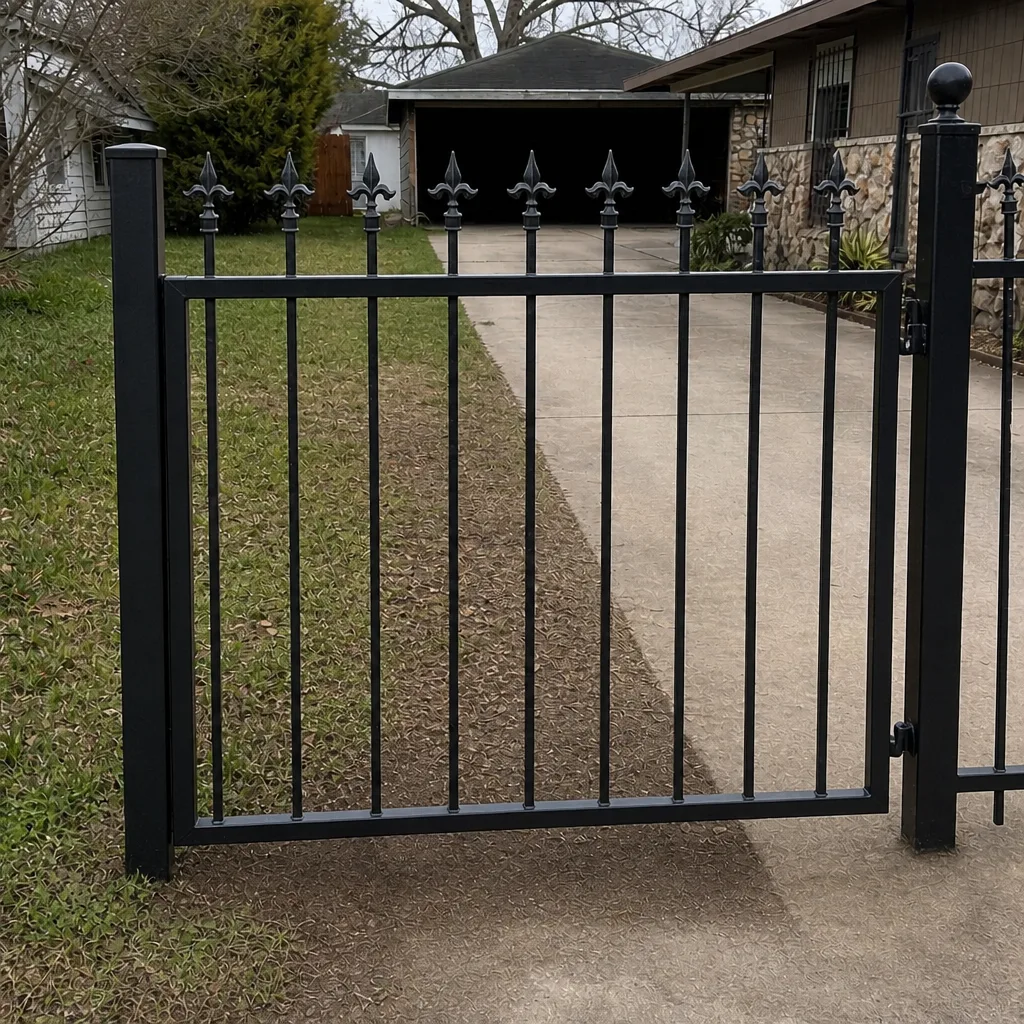
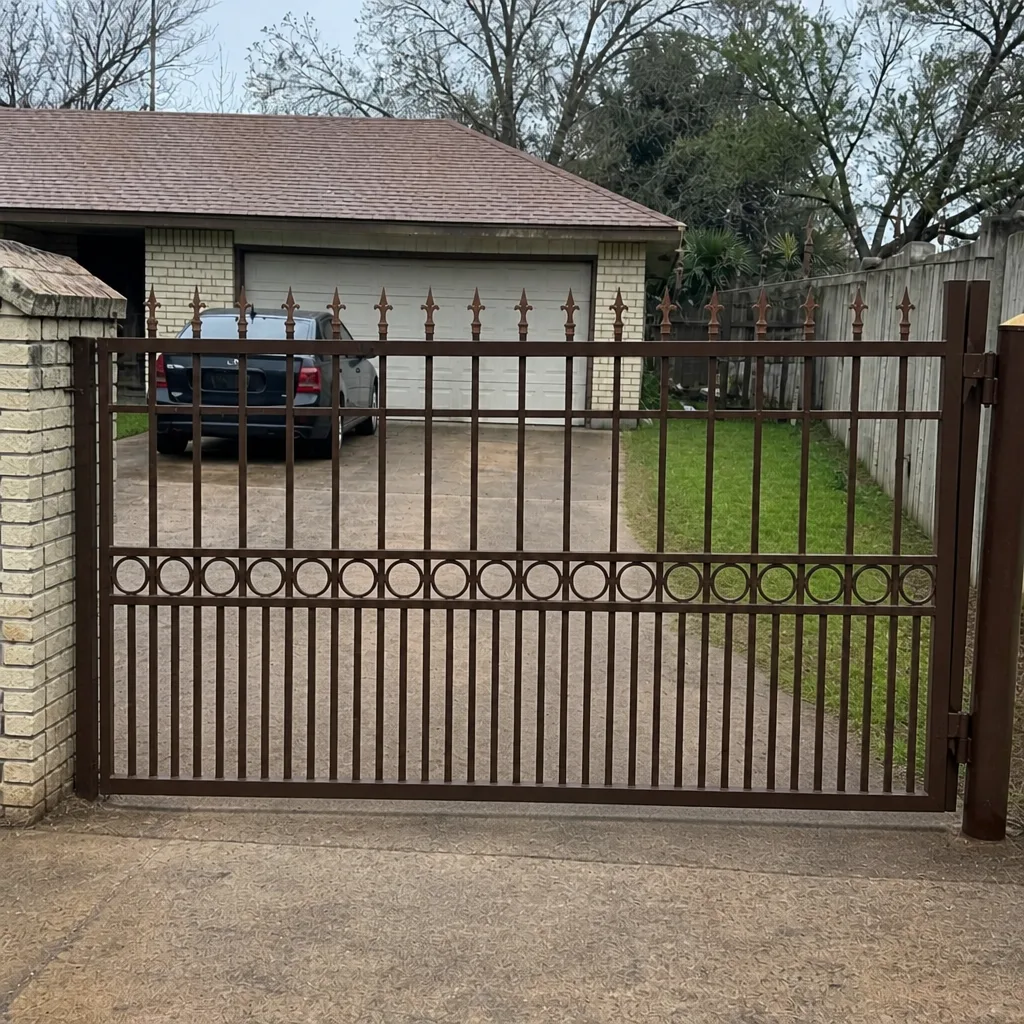
See the difference
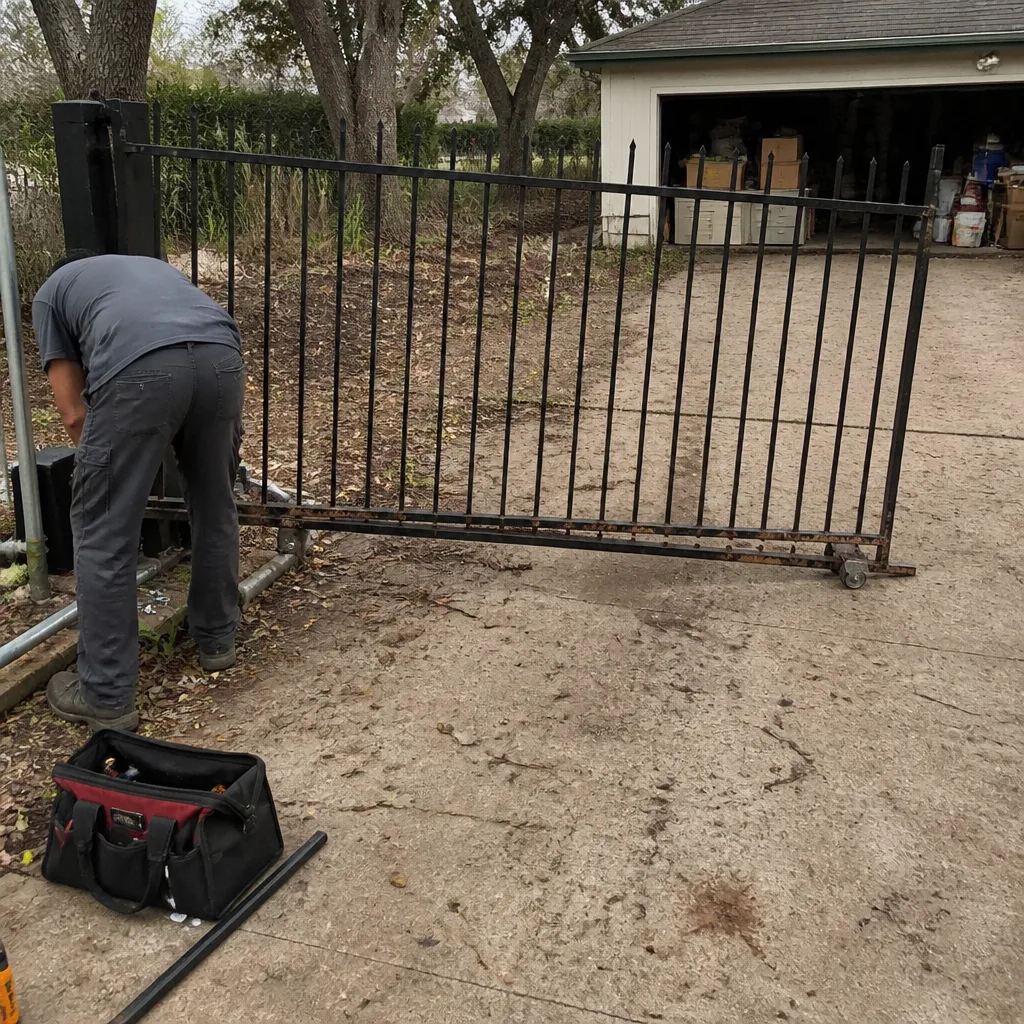 Before
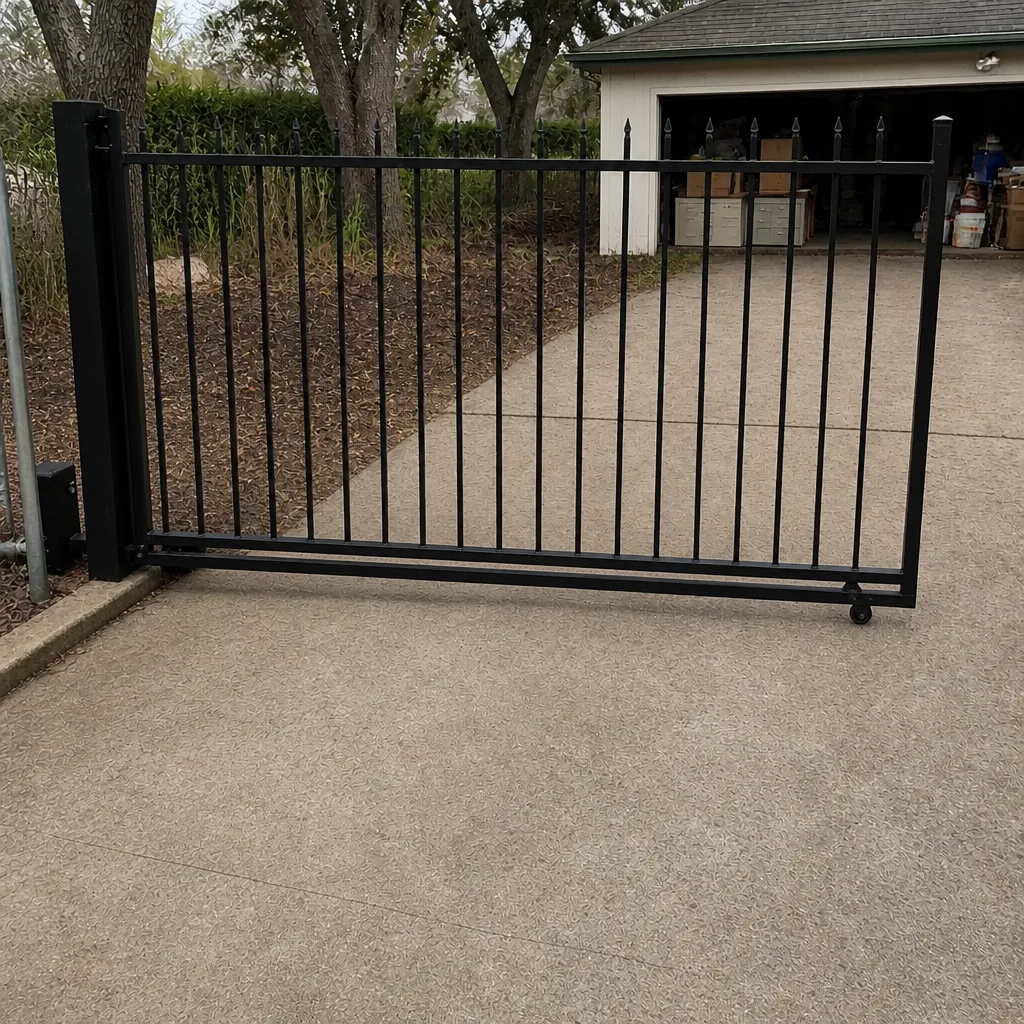 After
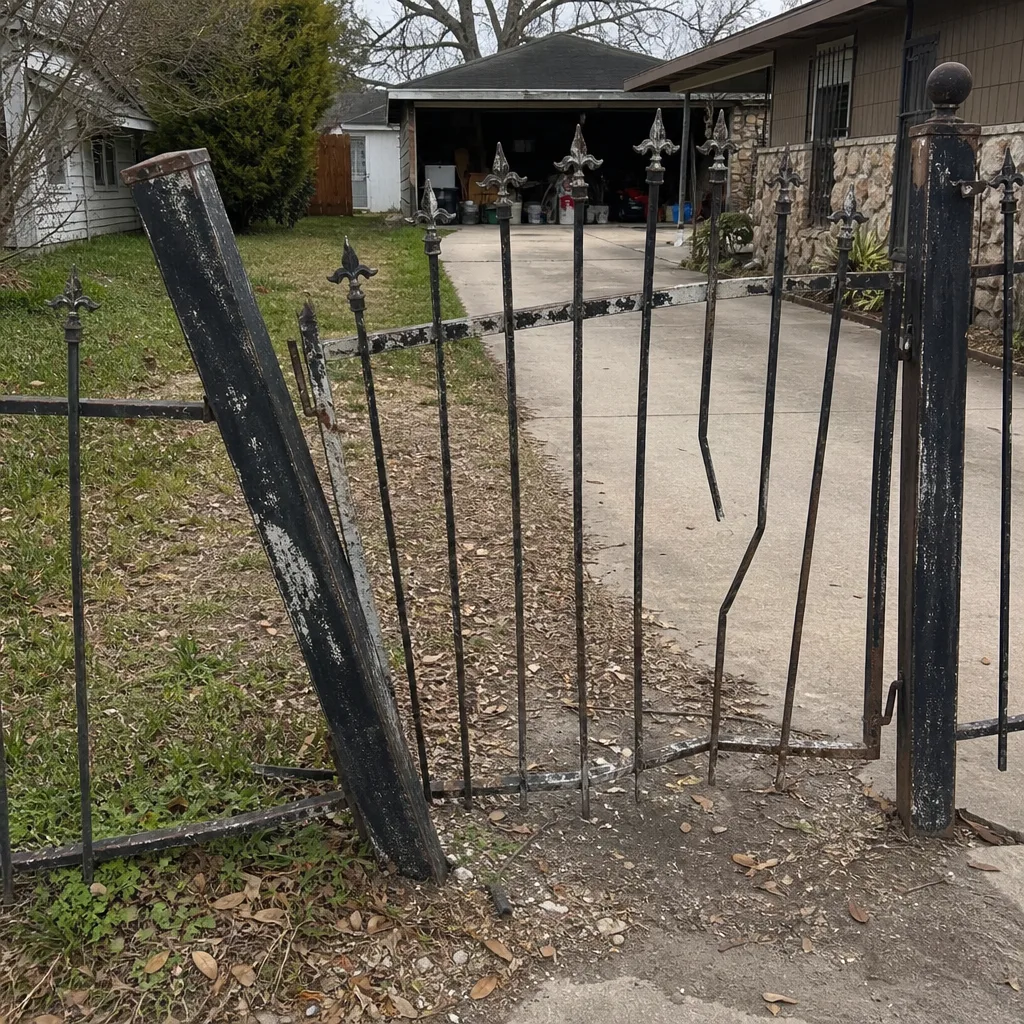 Before
 After
 Before
 After
The Bottom Line
Gate problems in Pasadena almost always trace back to one of three forces: humidity, clay soil, or the ripple effect of an earlier repair. Read the symptom before you touch the operator. Check the alignment before the electronics. Match parts to the brand you’ve got. And when a gate that’s failing structurally keeps looking like a small repair, trust the diagnosis over the shortcut. A gate specialist – not a general handyman – is the fastest route to a fix that holds. If you’re in Pasadena and the gate is telling you something, we can read it with you. Pasadena Gate Service is reachable at (855) 772-8171 for a free estimate, and you can read more about the region we cover on our Pasadena page. Start with Pasadena Gate Service if you want the full picture of what we do.
Contact
Call (855) 772-8171 for a free estimate. We answer 24/7. Fast dispatch from 7am to 7pm, Sunday through Friday. Our technicians have up to 15 years of experience and work on your existing brand, whatever it is – LiftMaster, FAAC, BFT, Linear, Viking, Ghost Controls, DoorKing, Elite, or Mighty Mule. Diagnosis first, solution second, and the price is quoted and agreed before any work starts.
Written by the team at Pasadena Gate Service.