
Last updated November 15, 2026
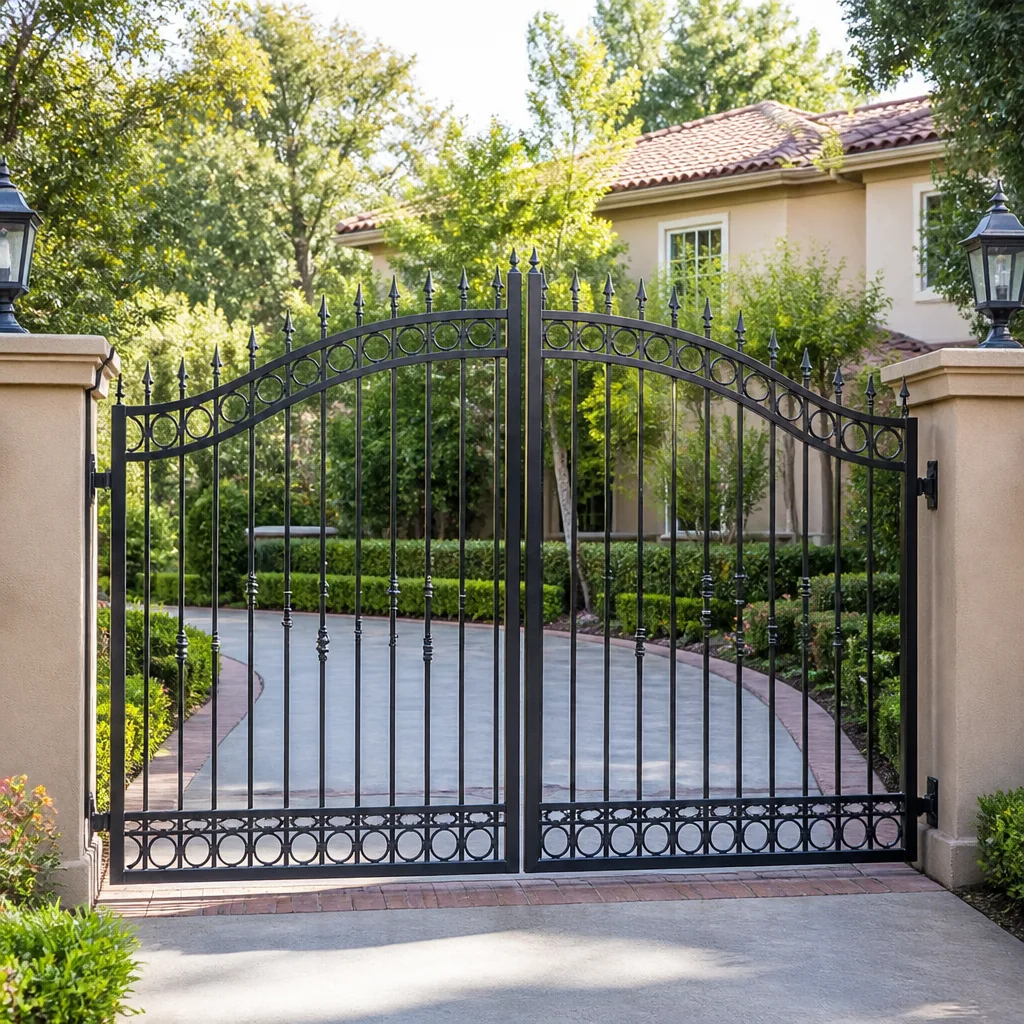 Wrought iron
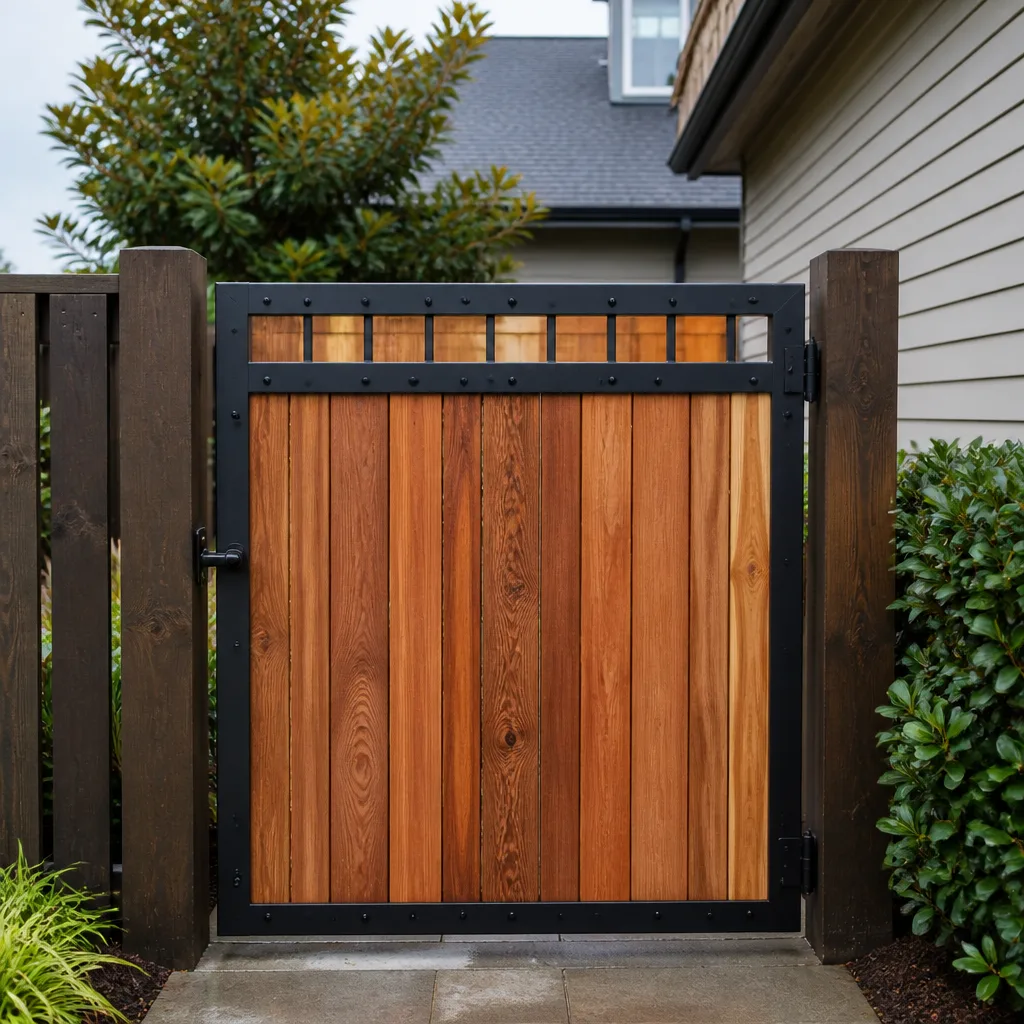 Wood & steel frame
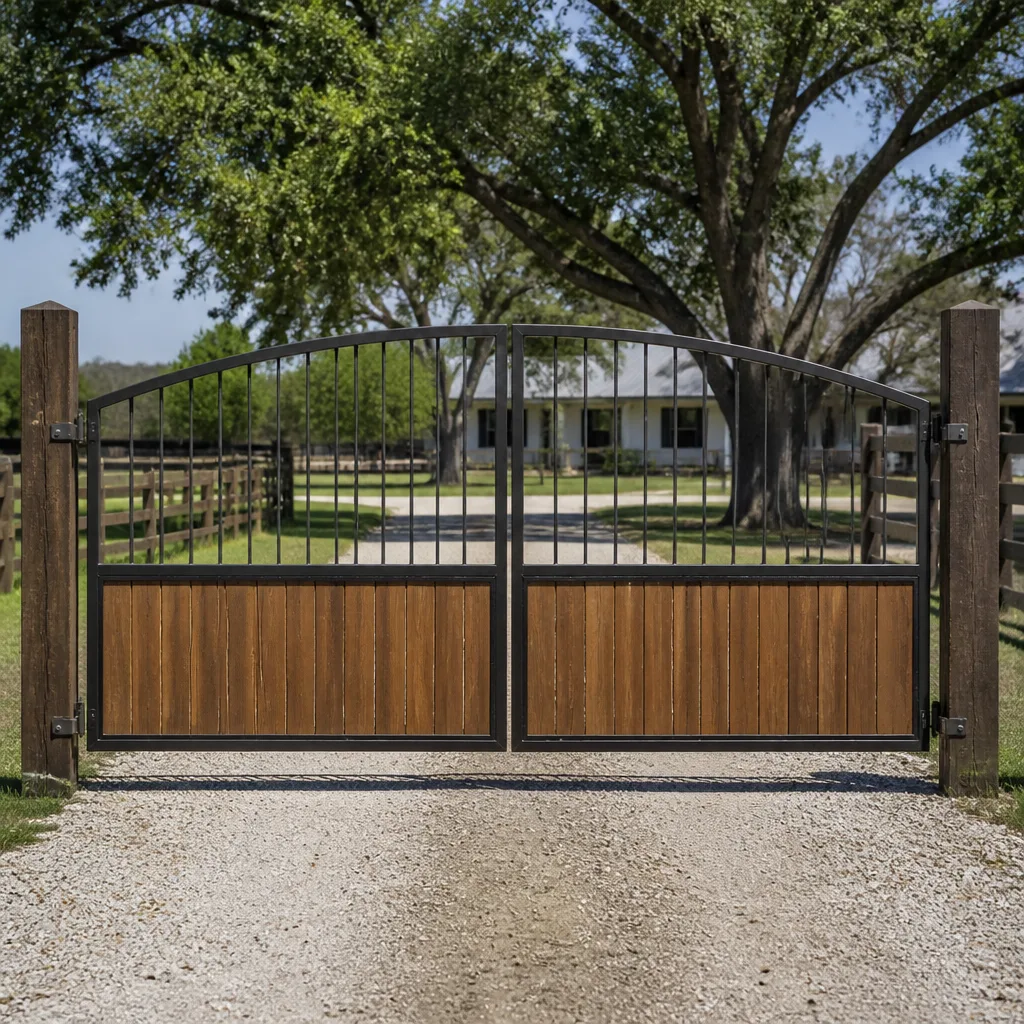 Farm & ranch
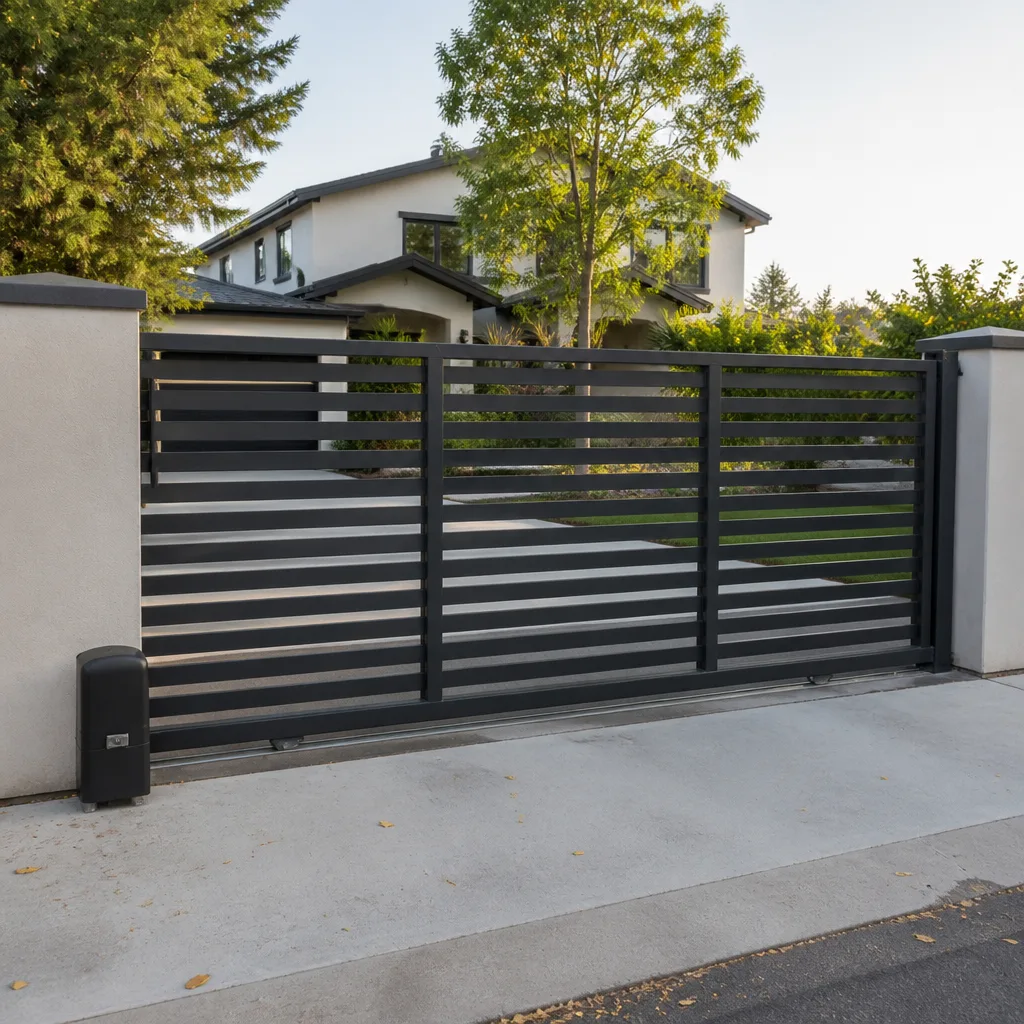 Sliding driveway gates
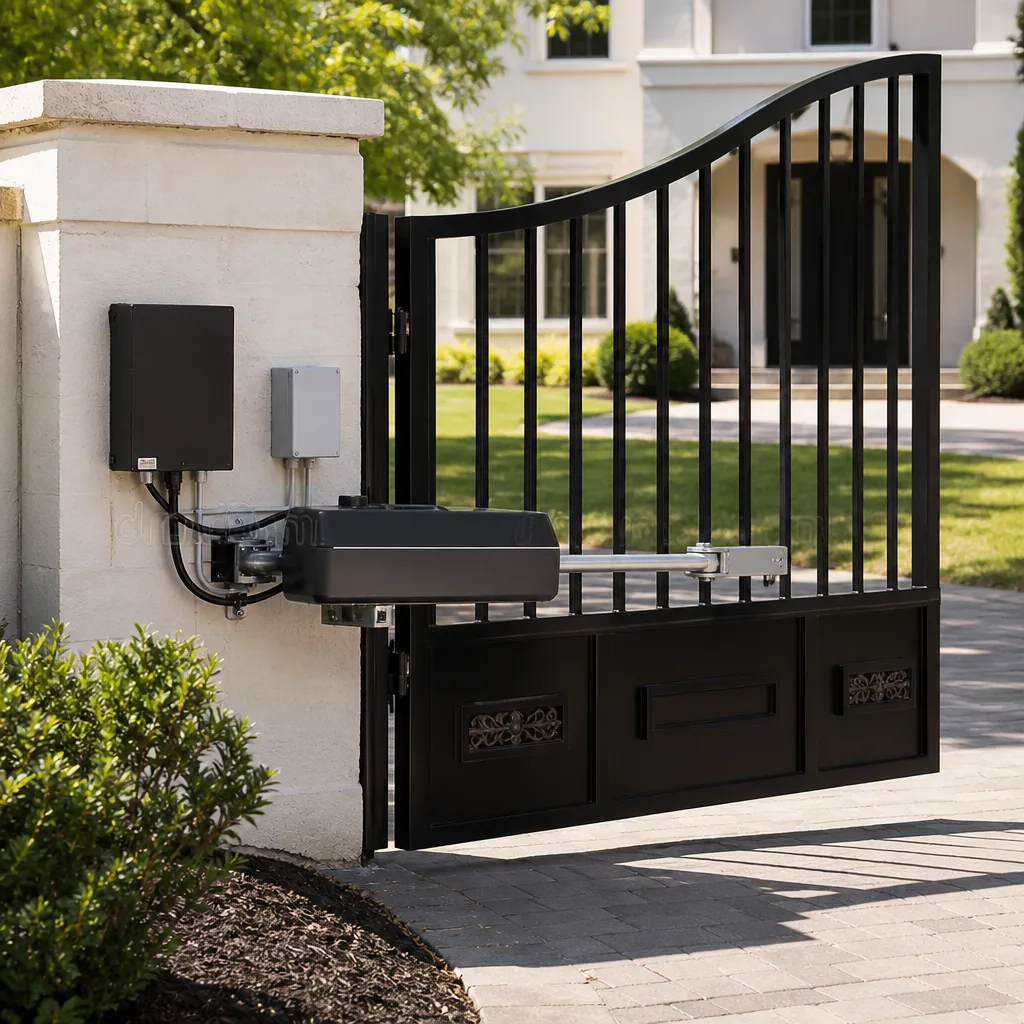 LiftMaster operators
Free on-site gate assessment - hinges, posts, and your LiftMaster or Nice gate operator checked before anything is quoted
The assessment is free and the quote is the invoice.
Get your free estimateDIY vs Professional Gate Repair: The Pasadena Homeowner’s Decision Guide
Most homeowners ask the wrong question. They ask “am I handy enough to fix this myself?” when the better question is “which part of my gate is actually broken?” Those are very different things. A squealing hinge and a misprogrammed control board both look like “gate problems,” but one is a ten-minute task with a grease gun and the other is a job that decides whether your gate crushes something. In Pasadena, where a motorized driveway gate is common on residential lots and small commercial properties alike, we’ve watched homeowners save real money on the small stuff and lose it on the big stuff. This guide draws the DIY line by task, not by skill level, so you know exactly where your ability stops and where liability begins.
Quick Answer
You can safely handle a handful of gate tasks yourself: lubrication, minor alignment tweaks, sensor cleaning, and remote battery replacement. Anything that touches the operator, control board, electrical wiring, or the gate’s structural frame should go to a gate specialist. Because UL 325 requires entrapment protection on motorized operators, a DIY wiring fix that bypasses those safety features can create legal exposure your homeowner’s insurance may not cover. In short: cosmetic and cleaning tasks are fair game; electrical and structural work is not.
Styles & brands we work with
- Wrought iron
- Wood & steel frame
- Farm & ranch
- Sliding driveway gates
- LiftMaster operators
Table of Contents
- Why This Decision Matters More Than You Think
- Tasks You Can Safely Do Yourself
- Tasks That Look Simple but Aren’t
- Why Structural DIY Repairs Usually Fail
- The Insurance and Liability Angle
- How to Do a Credible First-Pass Diagnosis Yourself
- Why Brand Knowledge Changes the Calculus
- Pasadena Conditions and What They Do to Gates
Why This Decision Matters More Than You Think
A gate is not a fence with a hinge. It’s a machine that holds a heavy panel over a space people walk and drive through. When a motorized gate is involved, the operator is a powered piece of equipment governed by UL 325, the standard that requires specific entrapment protection features such as photo-eye sensors, edge sensors, or other means of detecting an obstruction. Those features exist for one reason: a moving gate can seriously hurt or kill someone. A child, a pet, a delivery driver cutting the corner.
That’s the part most DIY advice skips. A homeowner with mechanical confidence can usually diagnose “the gate won’t open” in about five minutes. The trouble starts when the fix requires reaching into the control box, adjusting limit cams, or recalibrating a loop detector. These aren’t just complicated – they’re the exact systems the safety standard was written to guard. When someone bypasses a photo-eye because “it kept tripping,” the gate now moves without checking whether anything is in its path. That’s the line this whole guide revolves around. Not whether you’re capable. Whether the part you’d be touching is one you should touch.
Pasadena properties tend to have long driveways and automatic gates that see constant use, from daily commutes to deliveries. A gate that fails closed locks you out. A gate that fails open leaves your property exposed. And a gate that fails in a dangerous state is a whole different category of problem. Knowing which category you’re in before you grab a screwdriver is the entire point.
Tasks You Can Safely Do Yourself
Here’s the good news: several genuinely useful gate tasks are well within reach for a homeowner with basic tools. These don’t involve the operator’s electrical internals or the gate’s structural load. They’re maintenance and small adjustments, and doing them yourself is smart.
- Lubrication. Hinges, rollers, and the track on a slide gate benefit from periodic lubrication. Use a lubricant suited to the hardware, wipe off excess, and avoid spraying near sensors or the operator housing. This reduces strain on the operator motor and quiets the gate.
- Minor alignment adjustments. If a swing gate is dragging slightly or a slide gate roller is binding, small adjustments to rollers or stops are often fine. If you find yourself forcing something or bending metal, stop and call a specialist.
- Sensor cleaning. Dirty photo-eye lenses are one of the most common causes of phantom stops and “won’t close” complaints. A soft cloth and a gentle wipe on both the sending and receiving lens often resolves it. Don’t use an abrasive or solvent.
- Remote and keypad battery replacement. Dead remote batteries and keypad batteries produce symptoms that look like bigger failures. Swap the batteries first before assuming anything more serious. It saves a lot of unnecessary worry.
- Clearing debris. Leaves, twigs, and gravel in a slide gate track or under a swing gate cause false obstructions. A quick sweep and a cleared path do more than people expect.
None of these require opening the control box or touching high-voltage wiring. If a task on your list doesn’t appear above, that’s your cue to think harder about whether it belongs in professional territory. Our gate repair page outlines the kinds of issues that routinely need a trained hand rather than a homeowner’s afternoon.
Tasks That Look Simple but Aren’t
This is where DIY ambitions most often go wrong. Several adjustments on an automatic gate appear straightforward on video or in a manual but demand brand-specific knowledge and a clear understanding of how the safety systems interact with the mechanical trim.
- Operator limit adjustments. Limits tell the operator where the gate should stop opening and closing. Set them too loose and the gate slams or over-drives; set them wrong and the operator can keep pushing against a stop, straining the motor and the frame. Each operator brand handles limits differently, and the correct setting depends on the gate’s actual travel and weight.
- Control board programming. Whether it’s a Linear, Viking, DoorKing, or another brand, the control board manages timing, safety inputs, accessory functions, and often the reversing logic. A single mis-set parameter can disable an entrapment sensor without any obvious sign. Programming that ignores the safety logic is a hard no.
- Loop detector sensitivity calibration. Loop detectors “see” a vehicle over an inductive loop buried under the driveway. Sensitivity that’s too low misses cars; too high triggers on passing traffic or nearby metal. Calibration is a cut-and-try process that needs the right tool and an understanding of the site.
- Photo-eye and edge sensor replacement. Replacing a safety sensor sounds like a swap, but the new unit must be wired and positioned so the operator recognizes it as a valid obstruction signal. Get it wrong and the gate either won’t run or runs without protection.
We work on these systems every day, which is why our electric gate repair team treats them as core skills rather than side jobs. The gap between “looks easy” and “is safe” is exactly where a generalist gets into trouble.
Why Structural DIY Repairs Usually Fail
Structural gate repairs – hinge welding, post resetting, repairing a bent frame – are the most tempting DIY projects because they look like straightforward metalwork. They’re also the ones that come back to cost you twice. Here’s why.
A gate’s frame carries real weight and constant dynamic load. A swing gate hangs from hinges on posts; a slide gate rides on rollers along a track. When a post starts leaning or a hinge starts failing, the visible problem is a symptom of a load problem. A homeowner welding a hinge back in place or patching a leaning post often stabilizes the symptom without correcting the underlying alignment. The gate moves again, and for a while it looks fixed. Then the weld cracks, the leaning post pulls the frame out of square, or the operator, now fighting a misaligned gate, wears out faster.
The trap is that this “temporary fix” makes the eventual professional repair harder and more expensive. When a specialist arrives to do it properly, the first task is often undoing the earlier patch. That’s labor you wouldn’t have paid for if the job had gone to a specialist from the start. Post setting, footing depth, and hinge geometry all have to be right for the repair to hold, and there’s no shortcut around that. For older Pasadena properties where gates have been patched over the years, the accumulated fixes can be more of a problem than the original failure. A technician has to sort through what’s been done before deciding what to correct.
If the gate’s frame, posts, or hinges are involved, that’s your stop sign. Call a specialist. The structural work is where a quick DIY save most reliably turns into a second, larger bill.
The Insurance and Liability Angle
Most homeowners don’t think about insurance until after an incident, and by then it’s too late to matter. A motorized gate is a powered, moving piece of equipment on your property. If it injures someone – a visitor, a delivery driver, a child – the first questions will be about whether the gate was functioning safely and whether its required safety features were in place and working.
That’s where a DIY repair changes the picture. UL 325 exists specifically to reduce entrapment risk on motorized gates. If a homeowner disables, bypasses, or incorrectly wires a photo-eye or edge sensor to make the gate “work,” and later someone is injured, the fact that the safety feature was compromised becomes central to the claim. Insurers can and do ask whether the equipment was properly maintained. A repair that removed a required safety function can turn an ordinary liability question into a much harder one, and coverage may be disputed.
The counterintuitive point: the risk isn’t only about making a mistake. It’s about making a change that seems like a fix but quietly removes protection. A gate that closes reliably after a DIY wiring change might be doing so with its obstruction detection disabled. Nobody notices until somebody gets hurt. For any work touching the operator’s electrical system or the safety sensors, the safer answer is to have a trained gate specialist do it and confirm the safety features are functioning. In our experience, that confirmation is the part homeowners can’t easily do themselves, because they can’t test what they don’t fully understand.
How to Do a Credible First-Pass Diagnosis Yourself
Here’s where DIY actually pays off even when you’re going to call a professional. You can gather information before you call, and that shortens the diagnostic process, which reduces your bill. You’re not trying to fix anything. You’re trying to describe the problem clearly enough that the technician arrives already pointed in the right direction.
- Note exactly what happens and when. Does the gate fail to open, fail to close, stop mid-travel, or reverse for no apparent reason? Does it happen every time or intermittently? Write it down.
- Check the obvious before assuming a bigger failure. Confirm the remote battery and, if there’s a keypad, its battery. Look for debris in the track and check that the photo-eye lenses are clean. These quick checks rule out the simplest causes.
- Listen. Is the operator motor running but the gate not moving? Is there a click with no movement? Is the motor straining? The sound narrows down whether the issue is mechanical or electrical.
- Note any recent changes. New landscaping near the driveway, recent work on the property, a power outage, a storm – anything that changed around the gate before the problem started.
- Photograph the control panel and operator. Note the brand name and any model markings on the housing. The brand matters because the technician can bring the right knowledge and parts.
When you call a specialist with this information, the diagnosis gets faster and more accurate. Our technicians have up to 15 years of experience, and even they start every job with the same questions. Answering them ahead of time is genuinely useful.
Why Brand Knowledge Changes the Calculus
A big part of why some “simple” DIY tasks are actually hard comes down to brand. Two operators with the same symptom can need completely different fixes depending on who made them. A control board layout, a limit mechanism, a loop detector calibration procedure – these vary from brand to brand, and the manual for one doesn’t help with another.
That’s the practical reason brand fluency matters. When a technician arrives already familiar with the exact system on-site, the diagnostic process speeds up and the repair is more accurate. We service the major gate brands, including Linear, Viking, Ghost Controls, and DoorKing, among others. A homeowner working from a generic YouTube video doesn’t have that context. They’re guessing at brand-specific procedure with no feedback loop until something goes wrong.
This also affects the repair-vs-replace decision. A specialist who knows your brand can often diagnose and repair a control board or operator rather than recommending a whole new system. A homeowner frustrated enough to consider replacement because “it’s probably dead” may be looking at a straightforward fix. Before you assume a failed gate means a new gate, it’s worth having someone who knows your brand take a look. Visit our Pasadena Gate Service page to see the scope of what we cover.
Pasadena Conditions and What They Do to Gates
Pasadena’s climate is mild compared to much of the country, and that shapes how gates wear. Winters are mild and there’s no hard freeze to worry about, but the area’s humidity and seasonal rain do their own work over time. Metal hardware can oxidize, wooden gate panels can swell and shift, and the ground around posts can move with moisture. These aren’t dramatic failures, but they’re the slow kind that show up as a gate that “used to close fine and now sticks.”
The practical takeaway for a homeowner is that regular lubrication and debris clearing go a long way here. Keeping hinges and rollers moving freely and keeping the track clear reduces strain on the operator, and it’s the single best thing you can do between professional visits. Where the climate hurts is in structural work: a post affected by ground movement needs proper resetting, and patching it in place tends to come back to fail. That’s not a DIY project, no matter how mild the weather. Spring and summer also bring active growth and debris, so a periodic check that the gate path is clear and the sensors aren’t blocked by overgrowth is worth the five minutes.
Pasadena has a mix of older properties and newer builds, and the gates reflect that. Older hardware may need more maintenance; newer automated systems may be fussier about brand-specific settings. Either way, the same line applies: routine upkeep yourself, technical and structural work to a specialist.
Common Mistakes to Avoid
- Disabling a safety sensor because it “kept tripping.” A sensor that trips repeatedly is telling you something – a misalignment, a dirty lens, or a real obstruction. Bypassing it removes the protection UL 325 requires and creates liability, especially on a busy Pasadena driveway.
- Forcing a stuck gate. Forcing a gate that won’t move can bend the frame or damage the operator. Stop pushing and have it looked at.
- Assuming a dead battery is a dead operator. Remote and keypad batteries account for plenty of “the gate is broken” calls. Check batteries first.
- Welding a hinge without addressing alignment. A weld that doesn’t fix the underlying misalignment just delays the failure and makes the eventual repair harder.
- Adjusting operator limits by trial and error. Limits that are close enough “for now” can strain the motor and frame. Brand-specific procedure matters here.
- Ignoring the control board’s error indicators. Modern operators often signal faults through lights or codes. Photograph them; they save diagnostic time.
- Choosing a generalist for electrical or operator work. A handyman who’s never programmed a DoorKing or calibrated a Viking loop detector may spend more time guessing than a specialist spends fixing.
See the difference
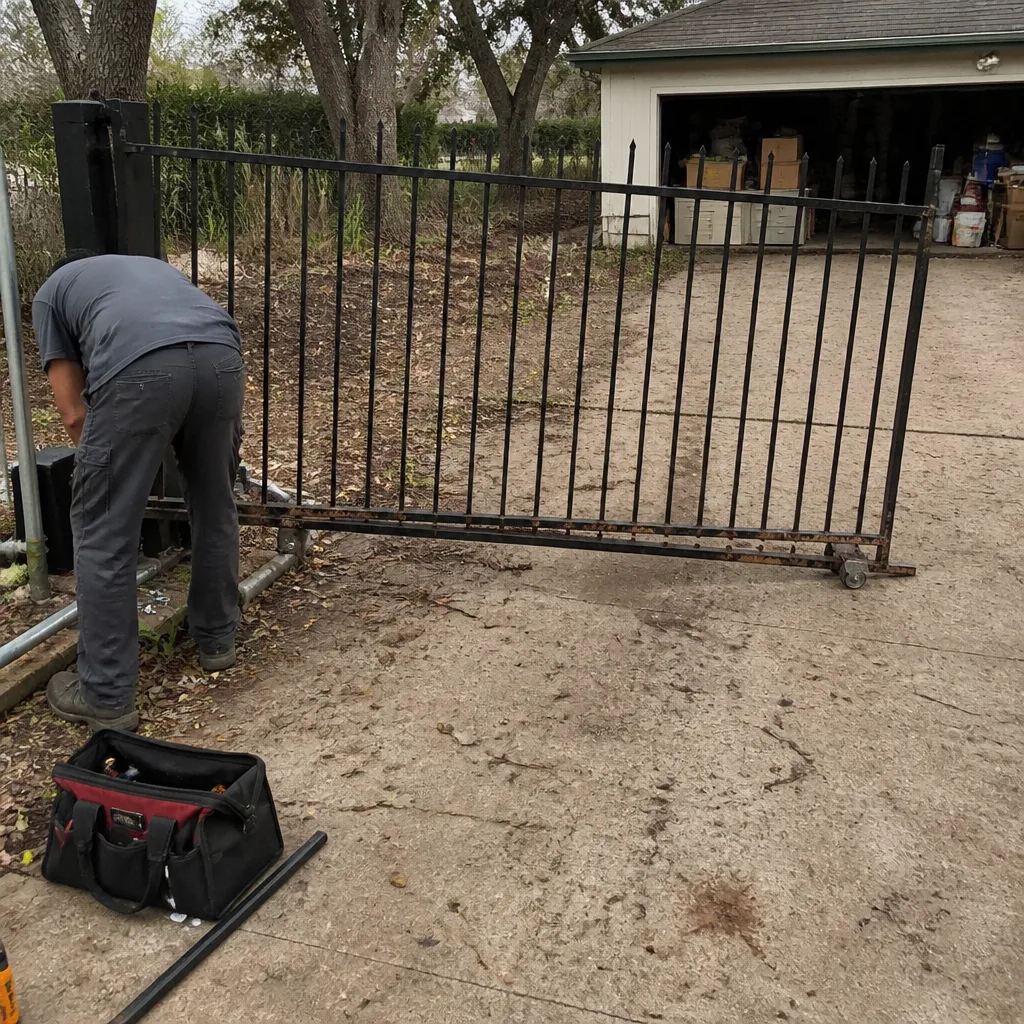 Before
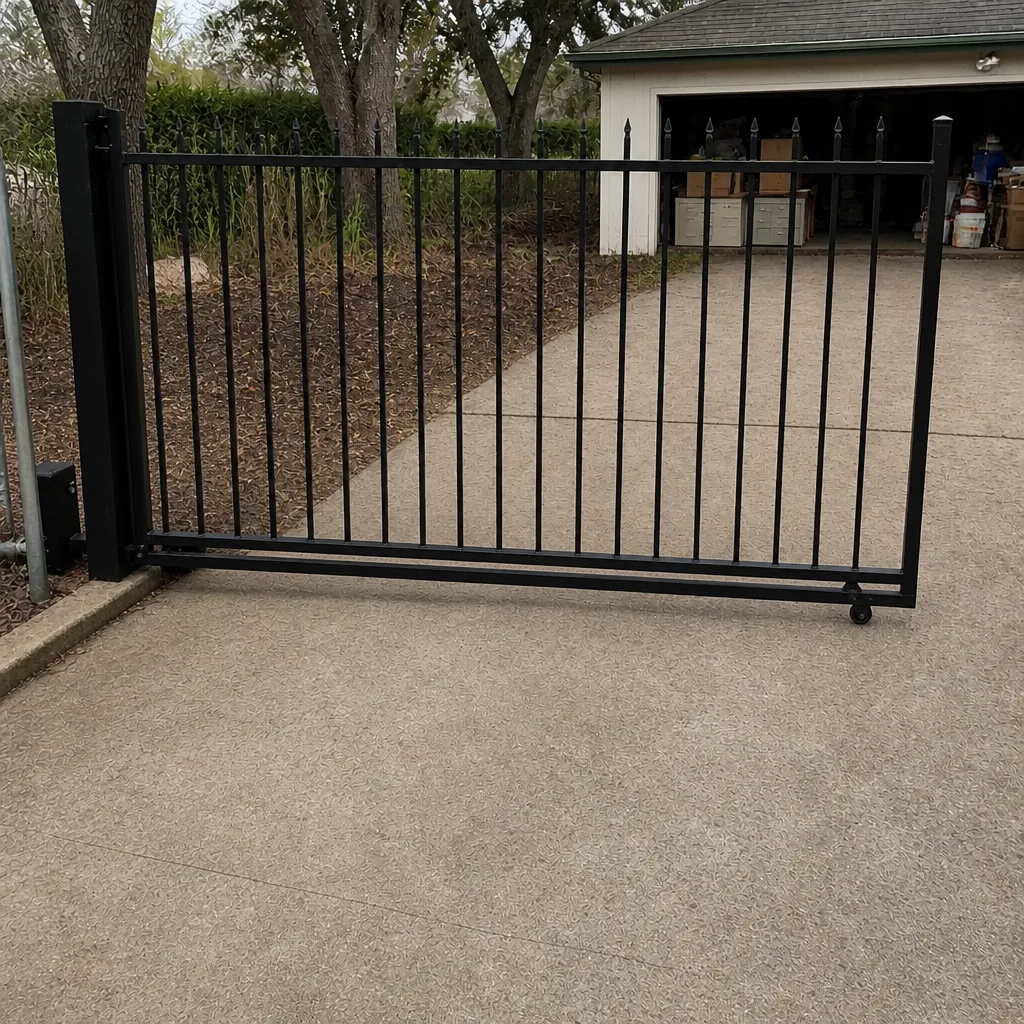 After
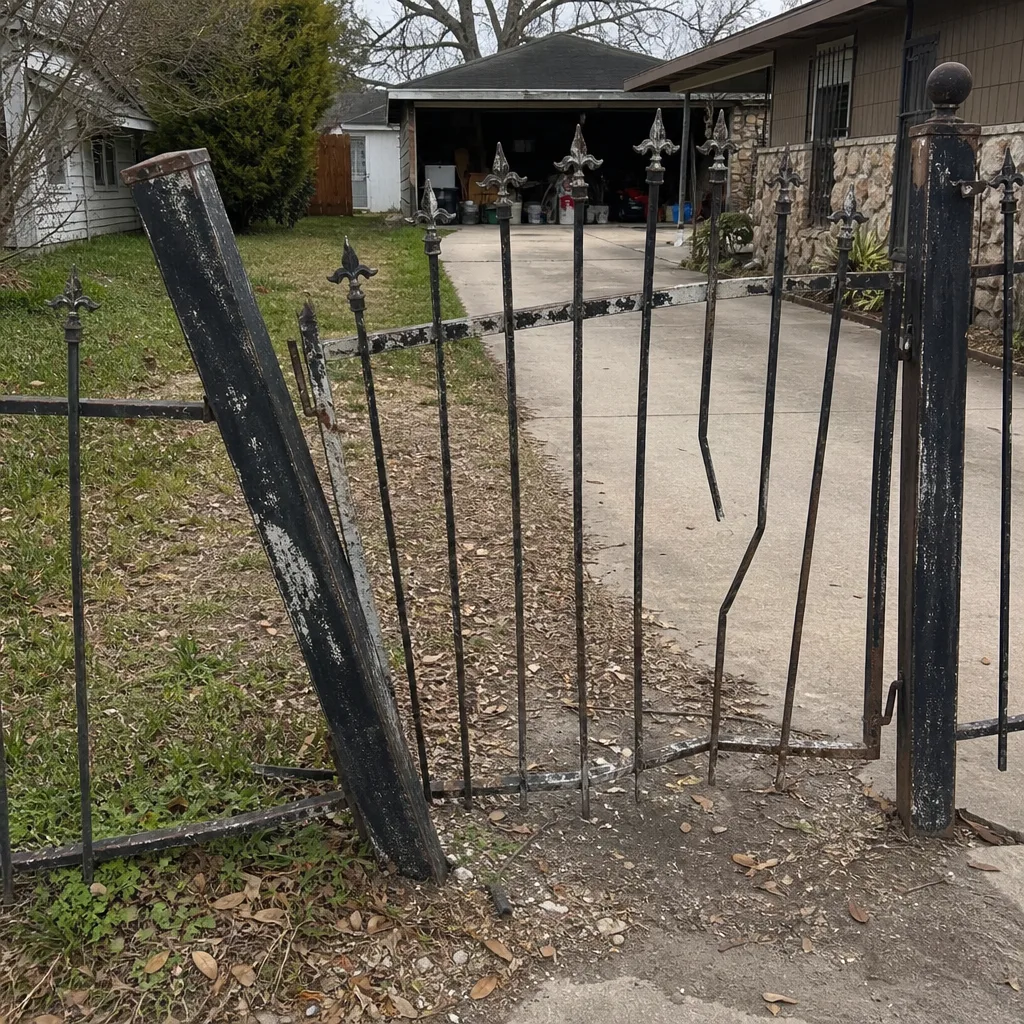 Before
 After
 Before
 After
When to Call a Professional
Call a gate specialist the moment your problem involves the operator, the control board, the electrical wiring, the safety sensors, or the gate’s structural frame. Also call if the gate moves unpredictably, reverses without cause, makes a new mechanical noise, or if you’ve already made a DIY attempt and the problem persists. Those are the situations where the cost of guessing exceeds the cost of a proper diagnosis. Pasadena Gate Service offers free estimates in Pasadena – call (855) 772-8171. We answer 24/7. Fast dispatch from 7am to 7pm, Sunday through Friday. The price is set per job by the written estimate, quoted and agreed before any work starts.
Frequently Asked Questions
Check the simple things first: remote battery, keypad battery, debris in the track, and clean photo-eye lenses. If those don’t resolve it, the issue is likely in the operator, control board, or sensor wiring, which needs a gate specialist. Don’t bypass a safety sensor to force the gate closed.
No. A photo-eye is an entrapment protection device under UL 325, and a replacement must be wired and positioned so the operator recognizes it correctly. An incorrectly installed sensor can leave the gate running without protection. Have a specialist handle it and confirm the safety system works.
A gate that stops and reverses is usually detecting an obstruction, real or false. Dirty or misaligned photo-eyes, a damaged edge sensor, or an overly sensitive loop detector are common causes. This is a safety system doing its job, so diagnosing it correctly matters rather than disabling it. Call (855) 772-8171 for a free estimate.
You can, but it usually doesn’t last. A failed hinge is often a symptom of a misaligned frame or post, and welding without correcting the alignment just delays the problem. A specialist repairs the underlying cause so the fix holds, which avoids paying twice.
Yes, if the loop is failing to detect vehicles or triggering falsely. Sensitivity calibration requires the right tool and knowledge of the specific brand and site. A specialist can calibrate it correctly and confirm the gate’s access logic works. Call (855) 772-8171 for an exact estimate.
Note exactly when the gate fails, listen for motor sounds, check batteries and debris first, and photograph the operator and control panel including the brand name. That information shortens the diagnosis and reduces your bill. Estimates are free, so there’s no reason to wait.
The Bottom Line
The right answer to “can I fix this myself?” depends entirely on which part of your gate is failing, not on how handy you are. Lubrication, sensor cleaning, minor adjustments, and battery changes are fair game and worth doing. The moment a repair touches the operator, control board, electrical wiring, safety sensors, or structural frame, DIY stops saving money and starts creating liability, because those are the systems UL 325 was written to protect. A credible first-pass diagnosis before you call makes the professional repair faster and cheaper. For anything past the basics, a gate specialist is the safer, smarter call. We answer 24/7. Call (855) 772-8171 for a free estimate in Pasadena, and fast dispatch from 7am to 7pm, Sunday through Friday.
Written by the team at Pasadena Gate Service.